Where the two professions met
When secular nursing organised itself in the nineteenth century, it did not begin from nothing — it began from sisterhoods that already ran wards, kept records and trained women for institutional work.
The Sisterhoods as the Existing Fact
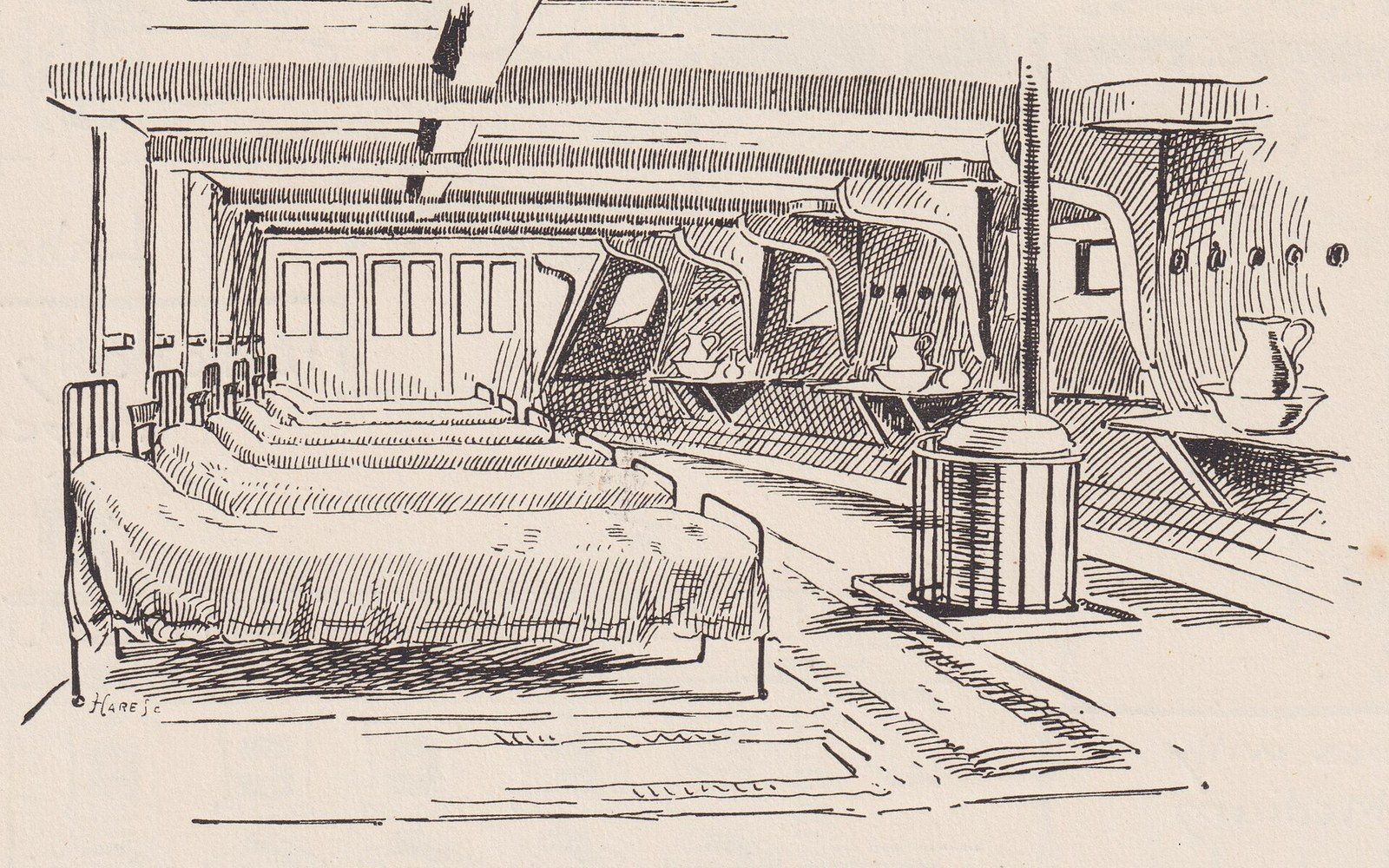
By the time Florence Nightingale returned from Scutari in 1856, the Daughters of Charity had been running hospital wards for more than two hundred years. Their houses operated across France, the German states, Ireland, Britain and the Americas; their sisters managed admissions, dispensed medicines under medical supervision, maintained ward order and — critically — answered to a centralised authority that could transfer, discipline or retrain a sister as an organisation would move an employee. That administrative architecture was not common in civilian institutions of the period. It was, in fact, one of the things secular reformers most wanted to replicate.
The Daughters were not the only sisterhood in the field. The Deaconesses of Kaiserswerth, founded in Prussia in 1836 by Theodor Fliedner, offered a Protestant equivalent — a community of trained women living under institutional discipline and working in a hospital setting. Nightingale herself spent time at Kaiserswerth in 1851, and her published account of what she observed there, though mixed in its assessment of the medical quality, acknowledged the structural achievement: women organised, housed, trained and deployed through a single institution. The point was not doctrine. The point was governance.
In France, the situation was starker still. The Hôtel-Dieu in Paris — one of the oldest hospitals in the western world, with a bed count that had reached and at times exceeded twelve hundred — had been staffed by religious women for centuries. The administrative records they kept, including the admissions ledgers that tracked who entered, who recovered, and who did not, represented an unbroken institutional memory that secular administrators had no comparable means of generating. When the French state began debating the secularisation of hospital nursing in the 1870s and 1880s, it was arguing, in practical terms, about how to replace a workforce that already knew what it was doing.
The Argument About Training
The emerging secular profession made training the pivot of its claim to legitimacy. If nursing was to be a recognised occupation rather than an act of charity, it needed a curriculum, a certification and a standard that could be assessed independently of any religious community's internal judgement. The problem was that the sisterhoods already had something that functioned like all three — it was simply not codified in a form the secular world could examine or replicate without negotiation.
The Daughters of Charity trained new members inside working institutions, learning from experienced sisters in a system closer to apprenticeship than to classroom instruction. The knowledge transmitted was real and extensive: ward management, basic pharmacy, patient handling, the logic of an admissions process, the discipline of a night watch. What it was not was written down in a syllabus or awarded through a formal examination. This made it invisible to reformers looking for a credential structure, and it gave secular advocates a genuine ground on which to argue that religious training was opaque, unverifiable and dependent on a community's self-reporting.
Nightingale's own position was more complicated than her public reputation suggests. She worked closely with religious sisters at various points, held specific communities in high regard for their practical competence, and was clear-eyed about the structural advantages that community life gave a sisterhood — the housing, the guaranteed labour supply, the absence of the domestic obligations that made sustained institutional work difficult for lay women. Her concern was not the sisters but the model: care that was accountable to a religious superior rather than to a medical and administrative hierarchy answerable to the state. The Nightingale Training School ↗, opened at St Thomas' Hospital in London in 1860, was a deliberate attempt to build the structural benefits of the sisterhood model — residential community, institutional loyalty, systematic instruction — without the ecclesiastical authority.
Borrowing, Competition, Displacement
What followed across the second half of the nineteenth century was neither clean replacement nor peaceful coexistence. It was a slow, uneven and country-by-country negotiation in which the two systems competed for the same wards and, often, borrowed from each other without acknowledgment.
In Britain, the great voluntary hospitals moved toward secular nursing at different rates and with different degrees of conflict. In France, the secularisation of public hospitals became an explicit political project after 1880, linked to the broader anticlerical programme of the Third Republic ↗. Laicisation of hospital personnel in public establishments began in Paris from the late 1870s and was extended by later measures, and the practical consequence was the displacement of sisters who had run wards for generations by lay nurses who were, in many cases, considerably less experienced. The transition was administratively abrupt in a way that exposed how much institutional knowledge had been held informally, in practice rather than on paper.
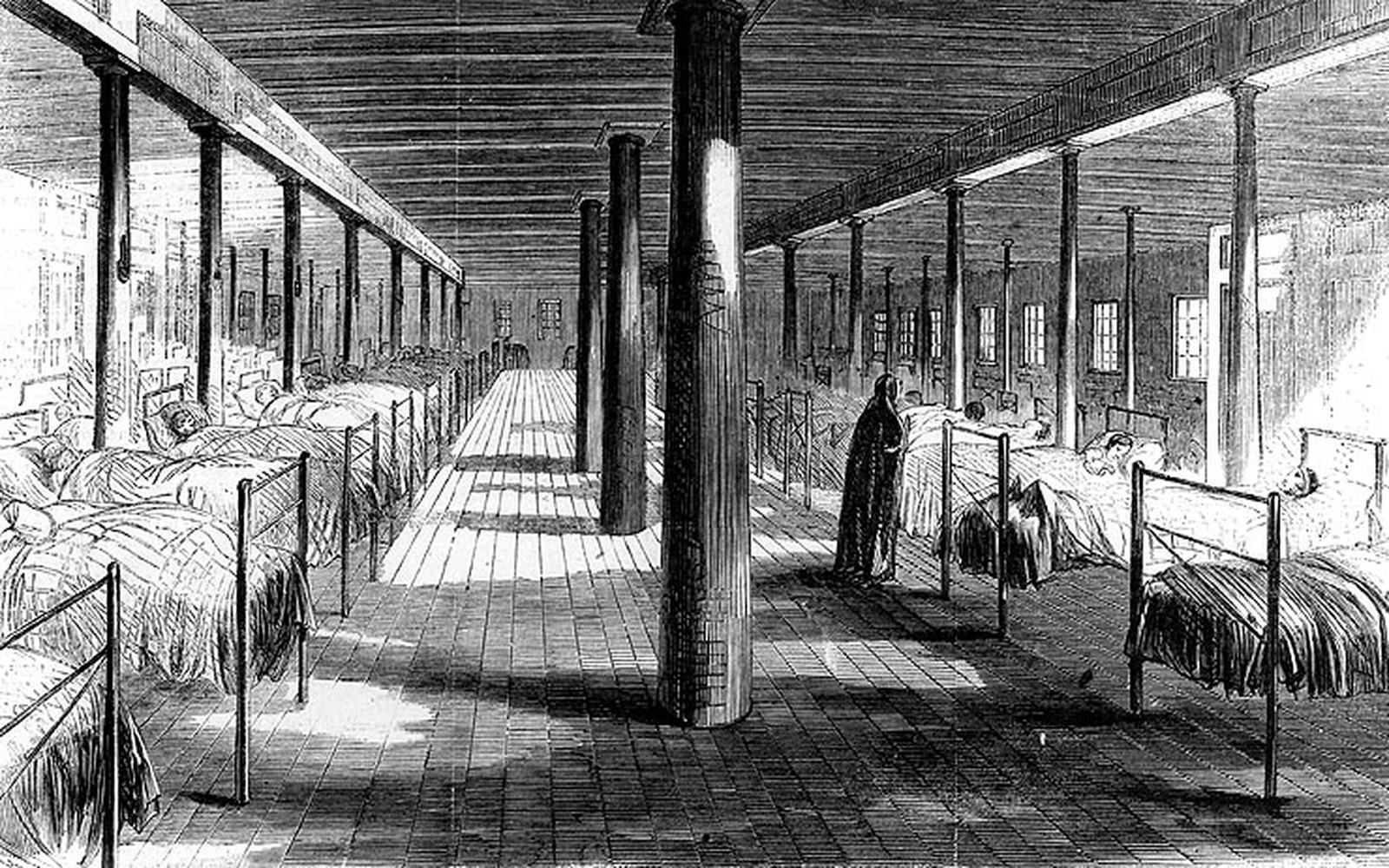
In the United States, the picture was different again. Religious sisterhoods, including the Daughters of Charity, had established and staffed hospitals throughout the country from the early nineteenth century onward, and their role in military nursing during the Civil War — one of the first large-scale tests of organised hospital care in an American context — was substantial and documented. Several congregations contributed nurses to both Union and Confederate sides ↗, and the experience confirmed, in conditions of extreme pressure, that organised religious communities could move trained women rapidly between institutions and maintain operational discipline in chaos. These were precisely the capacities the secular profession was still learning to build.
What the secular profession contributed, in turn, was the credential — and with the credential came accountability to a public standard rather than to an internal hierarchy. Nursing registration, achieved in New Zealand in 1901, in Britain under the Nurses Registration Act of 1919, and progressively across other jurisdictions, established for the first time a minimum standard that applied regardless of who ran the institution. A Daughter of Charity and a graduate of the Nightingale school would both need to meet it. That formal equivalence was new, and it changed the terms on which the two traditions related to each other.
By the early twentieth century the boundary had shifted decisively, though not uniformly. Religious communities continued to staff and administer hospitals — including large, technically advanced ones — well into the century. But the frame had changed: the sisterhood nurse now practised within a professional and regulatory structure she had not designed and did not control, rather than within an institutional system whose logic her community had built and sustained from the beginning. The Daughters of Charity had created, in 1633, a form of organised women's work that was genuinely new for its time. What the nineteenth century produced was a second form — secular, credentialled, state-accountable — that would eventually become the only form that counted in public law.