Habit as working equipment
The Daughters' dress was not ceremonial. It was a uniform chosen to survive a hospital ward.
Grey serge and its reasons
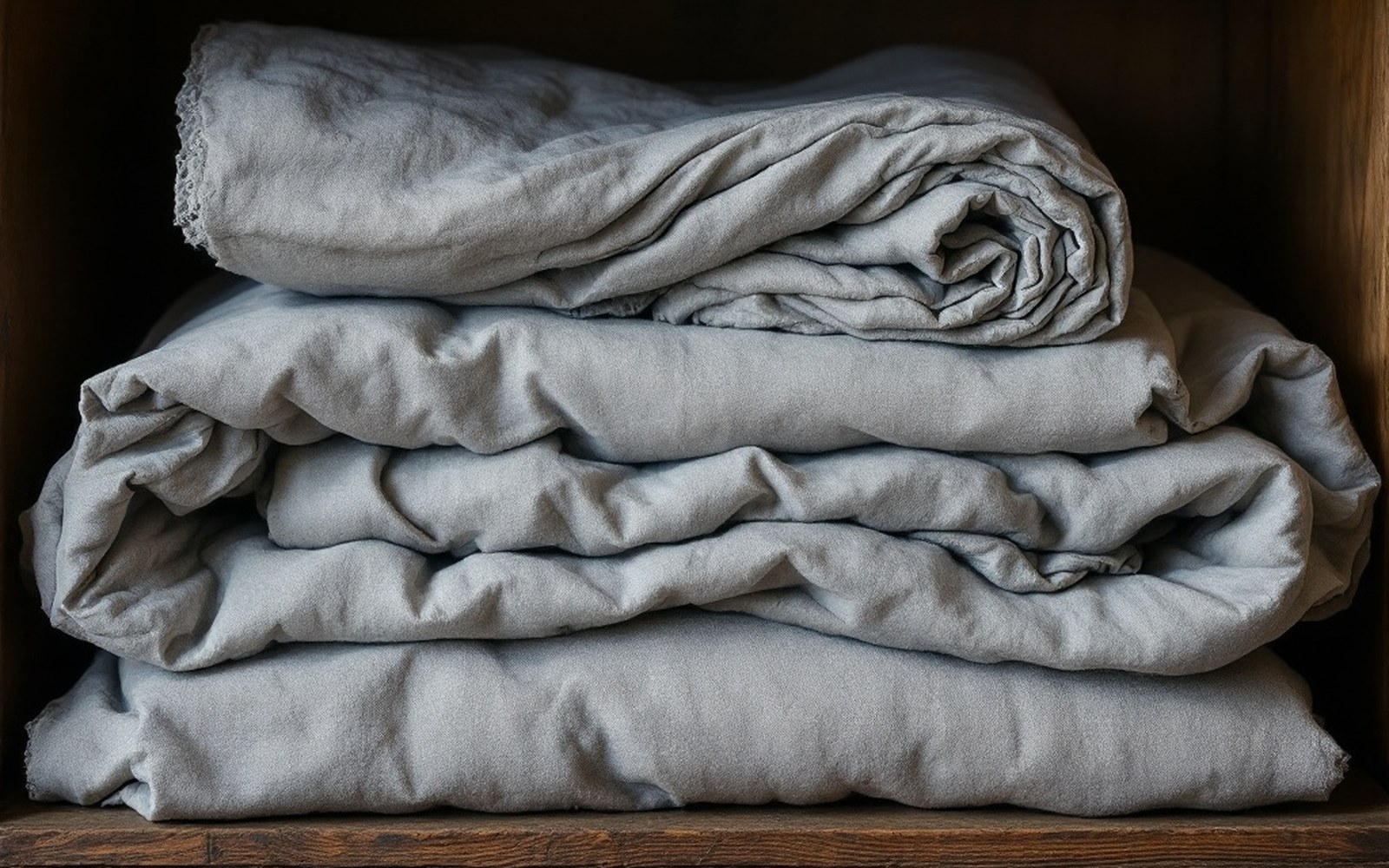
When Louise de Marillac ↗ settled the details of dress for the Daughters of Charity in the 1630s and 1640s, she was not legislating a symbolic identity so much as solving a practical problem. The women she was organising worked in conditions — Parisian hospitals, poor households, battlefield dressing stations — that destroyed clothing quickly. The answer was a habit in grey serge: robust, inexpensive, dyed to a colour that showed neither the ward's grime nor the dye-bleed of cheaper fabrics. Serge, a woven wool twill, held its shape through repeated washing in ways that linen alone could not, and its weight kept the wearer warm in unheated wards where draughts moved freely between open beds.
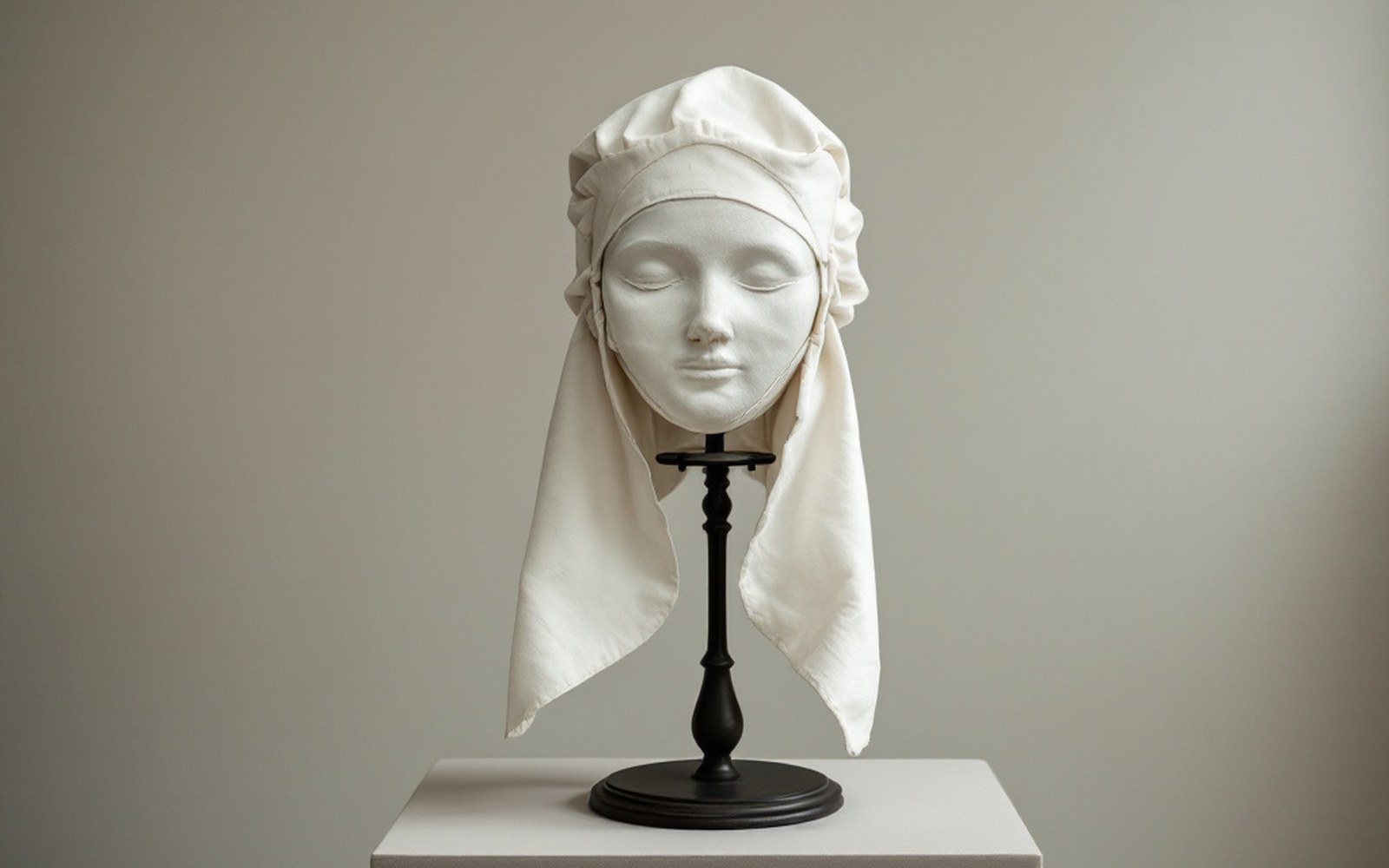
The rest of the dress followed the same logic. The apron, worn over the skirt, was the item closest to the work: changed more frequently than the habit itself, it was the barrier between the cloth and whatever the ward produced. The collar and cuffs were white linen — washable separately, replaceable when worn, and able to signal a cleanliness that the heavier outer layers could not always demonstrate after a long shift.
The cornette as functional object
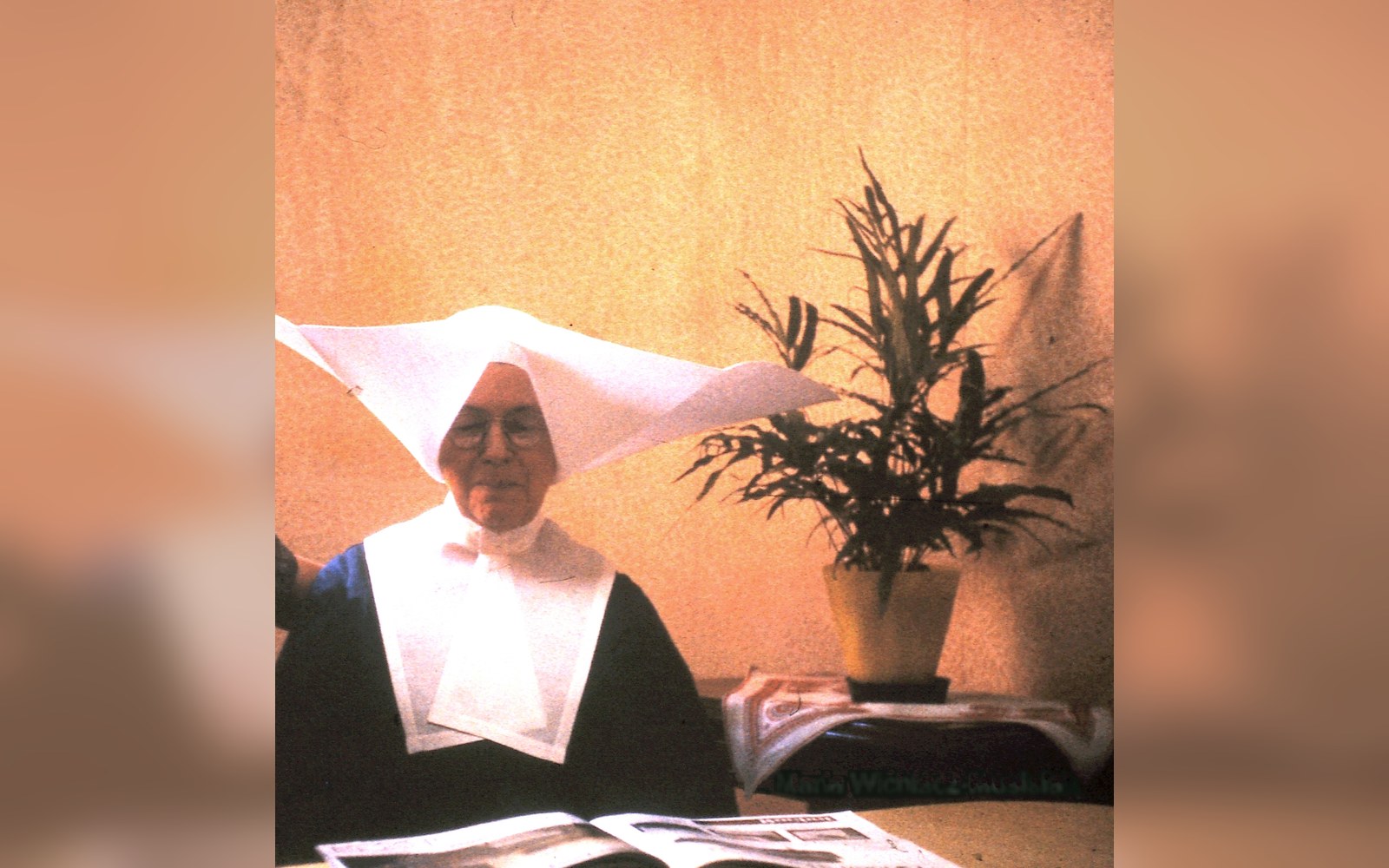
The cornette — the wide, starched white linen headdress — occupies an outsized place in the order's popular image, but its original justification was also partly practical. White linen could be boiled. In an era when washing the face, neck and hair was infrequent and when shared sleeping quarters were the norm in hospital accommodation, a headdress that could be removed, laundered at high heat, and returned clean was a genuine hygiene measure. Starch gave it its distinctive lateral wings, which also kept the linen away from the face and neck during close work, functioning something like the turned-back brim of a working hat.
The laundering of linen — collars, cuffs, aprons and cornettes — appears in the documentary record of early Daughters' houses as a scheduled, recurring task, not an occasional one. Linen had to be kept in sufficient quantity that rotation was possible; a house running short of clean headwear was running short of a working necessity. This administrative reality — linen counted, laundered, inventoried — placed the cornette firmly in the same category as the apothecary's stock list or the admissions ledger: something managed rather than merely worn.
What the uniform was not
The Daughters' dress was deliberately chosen to resemble the dress of working laywomen in early modern France rather than the habits of the established religious orders. This was not incidental. The 1633 arrangement that freed the Daughters from enclosure also freed them from the canonical habit — the formal religious dress that would have marked them as members of a recognised order and, by that very marking, restricted where they could go. A woman in a recognised religious habit did not enter a hospital ward without ecclesiastical permission. A woman in grey serge, a linen apron and a peasant headdress could move through the city.
The uniform therefore carried its own legal meaning, encoded in what it was not. The cornette was wide enough to be unmistakable at a distance — over time it became a recognised emblem of the Daughters specifically — but it was not a veil. The grey was not the black of monastic life. The materials throughout were those of the working world: washable, wearable, affordable in quantity, and replaceable when they wore out.
The habit Vincent de Paul and Louise de Marillac chose was, in the end, clothing designed to survive an institution ↗: physically, practically, and — quietly but deliberately — canonically.