The admission ledger

Who was admitted, when, and what happened to them was written down, which is why the institution can be studied at all.
How a hospital ward becomes history
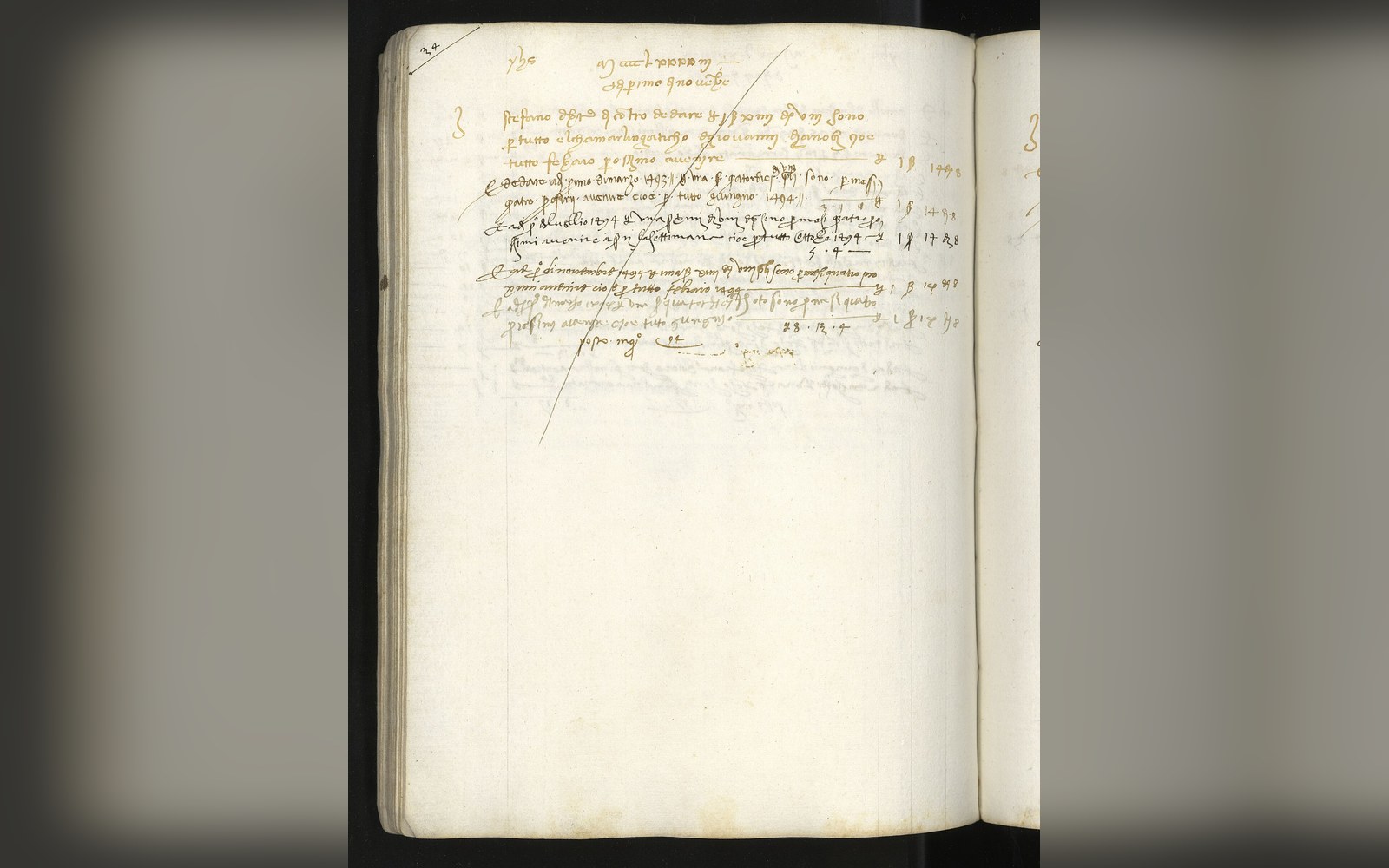
The admission ledger is the reason any of this can be written. Without it, the Daughters of Charity's hospital work would survive only in hagiography and rule books — descriptions of how things were supposed to be done, not evidence of what was actually done. The ledger recorded who entered the ward, on what date, with what complaint, under whose care, and how the case resolved. Multiply that across decades and dozens of houses, and the result is the documentary spine of institutional history.
The practice was not invented by the Daughters. The Hôtel-Dieu ↗ in Paris, the largest hospital in France and one of the oldest in Europe, had kept registers of a kind long before Louise de Marillac's women arrived to work its wards in the 1630s. But existing record-keeping was irregular, its categories inconsistent, and survival depended on circumstances no one controlled. What the Daughters brought, or rather what the administrative culture they helped build eventually produced, was something closer to systematic coverage: a register that was kept as an institutional obligation, not a personal one.
The ledger as administrative instrument
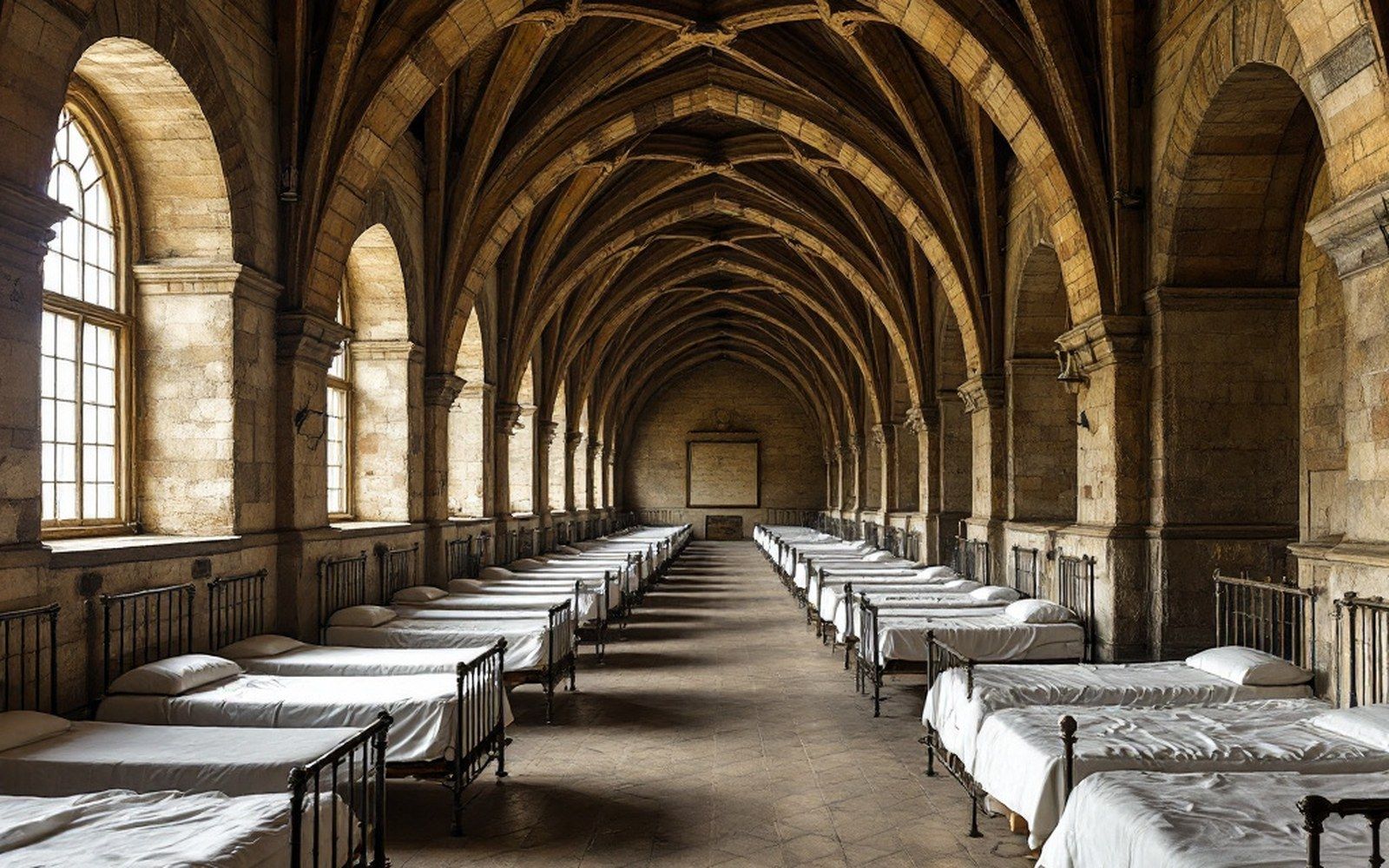
The admission register served immediate practical purposes that had nothing to do with posterity. A hospital that held hundreds of patients needed to know, at any given moment, who was present. The Hôtel-Dieu at its peak was managing well over a thousand beds — or, more accurately, a thousand bed-spaces, since beds were often shared between patients until well into the eighteenth century. The ledger was the instrument that distinguished one body from another in an institution that could otherwise reduce the individual to a numbered straw mattress.
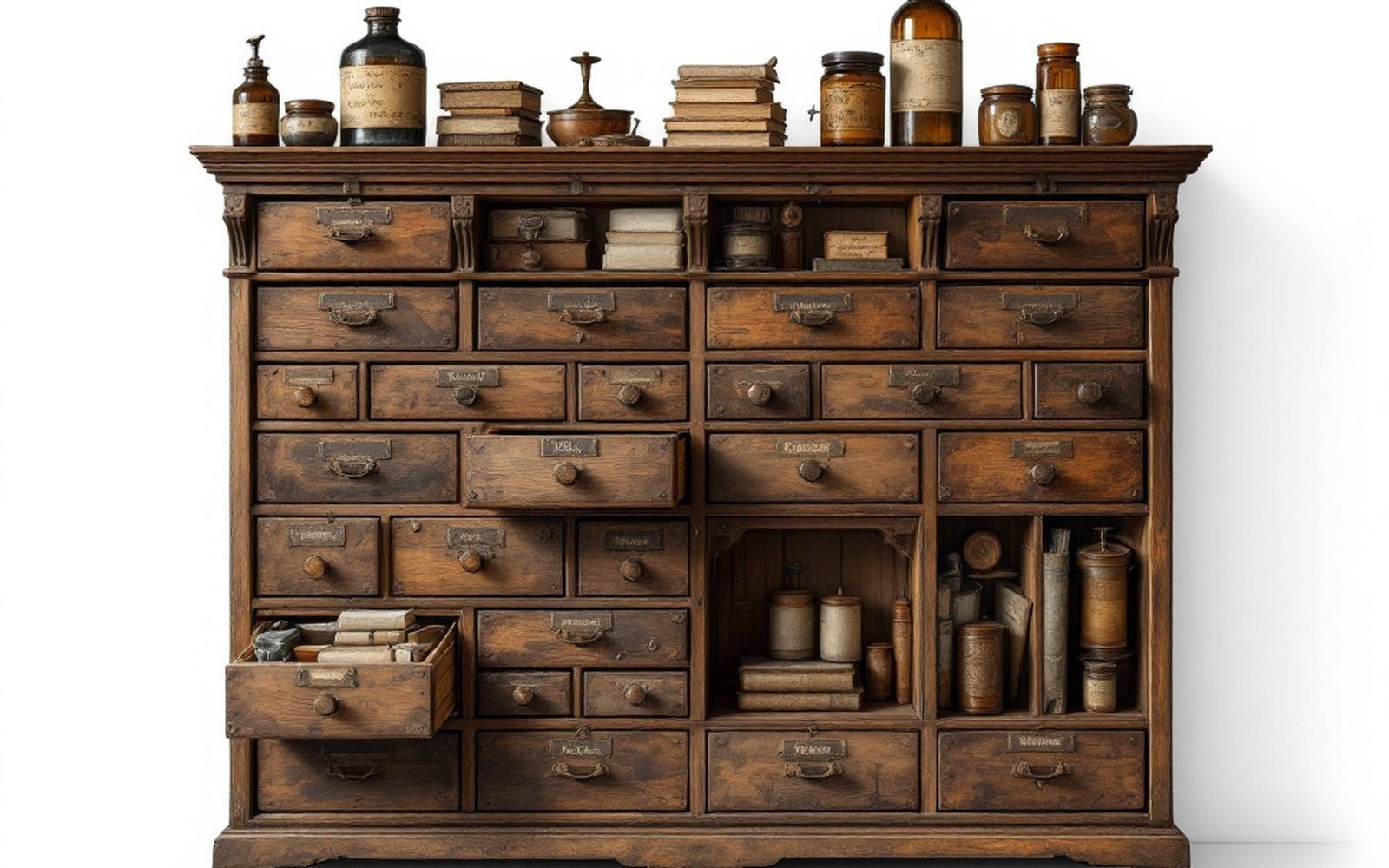
Admission records also tracked resources. The apothecary's dispensary issued remedies against the register: a patient's name appeared in the admissions book, and that entry authorised the medicines, the food, the linen. When a patient died, was discharged, or absconded — and all three outcomes were recorded — the entry was closed, the bed-space became available again, and the accounts could be reconciled. Running a hospital at this scale was an administrative problem before it was a medical one, and the ledger was one of the tools that made the arithmetic possible.
The Daughters of Charity who managed the wards were not passive recorders. They were the people who actually knew which patient was in which bed, because they had admitted the patient, dressed the wound, carried the broth and, in many cases, closed the eyes. The information that reached the ledger passed through their hands. Whether they wrote it themselves or communicated it to a clerk depended on the house and the period, but the functional knowledge was theirs.
What the records contain
A well-kept eighteenth-century hospital register typically carried a date of admission, the patient's name and parish of origin, the presenting complaint or diagnosis as the attending physician understood it at intake, and the outcome — recovered, died, still under treatment at the moment of entry. Later registers added columns for age, occupation, and sometimes the name of the surgeon or physician responsible. The range of complaints recorded is a window into what urban poverty looked like in practice: fevers of various kinds, wound infections following accidents or violence, conditions linked to manual trades, obstetric complications in houses that took in women in labour.
The outcome column is, in one sense, the most telling. A hospital in the seventeenth or eighteenth century was not where people went to get well in any predictable sense; it was where people went when they had no alternative. Mortality in the larger Parisian wards was high, and the ledger makes no effort to conceal the fact. The proportion of entries closed with a death notation varies by ward, by period, and by the nature of the patient population, but a frank reading of the registers strips away any comfortable generalisation about early modern care.
What the records do not contain, in this period, is systematic clinical detail — the day-by-day notes that would later define hospital medicine. Diagnosis at admission was a broad category, not a precise one. The term recorded might describe a symptom rather than a condition, and the same word covered very different underlying states. This is a limitation that historians and medical historians have had to work around, and it shapes the questions that can and cannot be answered from these sources.
Why survival matters so much
Not every house kept its records with equal care, and not every archive survived the disruptions that came after 1789. The French Revolution's ↗ reorganisation of hospitals, the suppression of religious congregations, and the simple losses of institutional upheaval thinned the documentary record considerably. What survives in the Archives de l'Assistance Publique – Hôpitaux de Paris, among other repositories, represents a fraction of what was produced, and that fraction is itself unevenly distributed across time and institution.
The houses that kept the fullest records, and where those records survived in the best condition, are consequently the houses that appear most often in the historical literature. This is not because they were more important but because they are more legible. The ledger, in other words, does not simply record history — it shapes which history is recoverable.
The ledger and the emerging profession
When secular nursing began to organise itself as a formal profession in the second half of the nineteenth century, one of the questions it confronted was what records a nurse should keep and what authority she had over them. The hospital register had always been, in the institutions where the Daughters of Charity worked, an institutional document rather than a clinical one — produced by and for the administration of the house. The shift toward patient-centred documentation, in which the nursing observations themselves formed part of the clinical record, was a change in concept as much as in practice, and it marked one of the clearer fault lines between the older tradition and the newer one.
That negotiation, at the point where the two professions met in the nineteenth-century hospital, drew on assumptions formed over two centuries of institutional record-keeping. The Daughters had proved that a large ward could be administered through systematic documentation. What the emerging profession argued, in part, was that documentation should serve the patient's treatment, not only the institution's accounts. The ledger was where both traditions had to confront the same question: what is the purpose of writing it down?
The answer was never settled in a single moment. But it was the ledger — the columns of names, dates, parishes and outcomes — that made the question unavoidable.