What training meant before it was a course
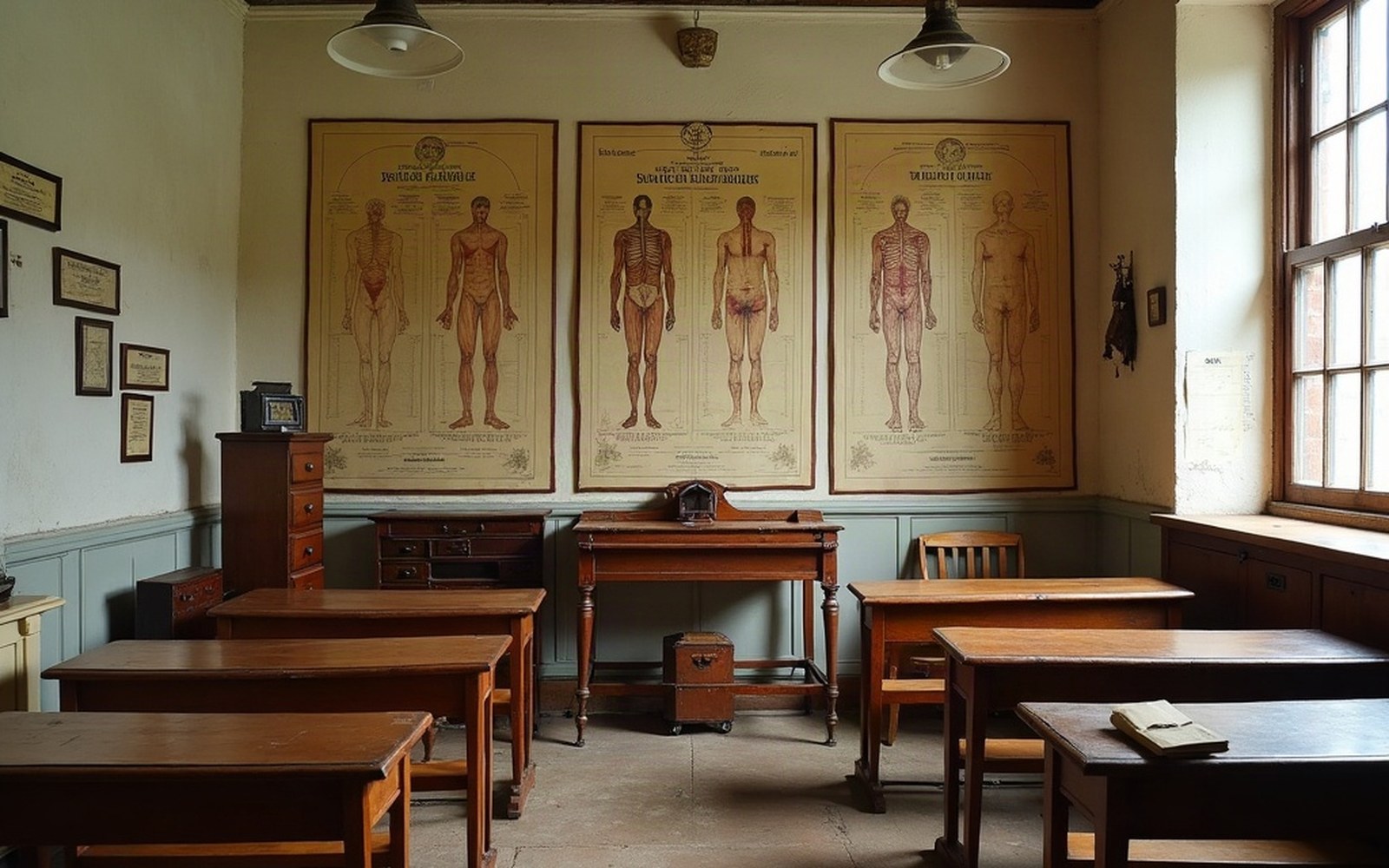
Instruction was apprenticeship inside an institution, and formalising it was the change that the later reforms are named for.
Instruction by proximity, not by syllabus
Before training was a curriculum, it was a room. A new recruit to the Daughters of Charity arrived at one of the Paris houses, watched someone older dress a wound or hold a patient upright for feeding, and learned by standing close enough to smell the work. There was no examination at the end, no certificate issued, no fixed duration. Competence was recognized rather than measured, and the woman who recognized it was usually the one who had been doing the same tasks for a decade longer.
This was not a failure of organization. It was the standard epistemology of skilled work in early modern Europe. The guild system transmitted craft knowledge the same way; so did domestic medicine, surgery before the licensing boards, and the apothecary's trade. What distinguished the Daughters of Charity from a purely informal arrangement was that their instruction operated inside an institution with a rule — a written document, a governing body, a record of assignments. That gave apprenticeship a skeleton it usually lacked.
The founding structure dates from 1633, when Vincent de Paul and Louise de Marillac ↗ established the company without enclosure. The decision to remain uncloistered was not simply a theological preference; it was the operational precondition for any training regime at all. A cloistered community could not move women between houses, rotate them through different patient populations, or send them to observe practice at a larger institution. The Daughters' mobility was the mechanism by which knowledge moved.

What the instruction actually covered
The curriculum, such as it was, had three domains. The first was physical care: positioning patients, applying poultices, managing dressings, recognising the stages of common fevers, assisting at bleedings performed by surgeons whose actual cutting the sisters did not do themselves. The second was administrative: recording admissions, maintaining the stores, managing the relationship with the apothecary who supplied the pharmacy and whose stock list had to match what the ward had actually used. The third was supervisory, because a sister who remained in a house long enough became responsible for training the next woman who arrived.
None of these domains had a standardised duration. A recruit who arrived already knowing how to manage a sickroom — because she had nursed family members, or had worked in a charitable confraternity before joining — moved faster through the physical care portion. One who arrived literate and numerate moved faster through the administrative work. The variation was entirely pragmatic: the house needed functioning sisters, not uniform graduates.
The Paris houses were the main site of this instruction, and the largest of the city's hospitals — the Hôtel-Dieu, with its enormous patient population and its admission ledgers that ran to hundreds of entries a month — served as an involuntary school simply by the scale of its problems. A sister working a ward of that size encountered pathologies, logistical crises, and administrative pressures that a provincial house would not generate in a year. The traffic of patients at the Hôtel-Dieu was, in practice, the advanced portion of a training no one had formally named as such.
What was written down mattered as well. The admissions ledger — recording who entered, on what date, with what presenting condition, and what happened to them — was itself a teaching document, though it was not designed as one. A sister who maintained and read the ledger over time accumulated a record that a modern clinical epidemiologist would recognise as a case series. The patterns it contained were available to anyone willing to look at consecutive entries across seasons. Whether that reading was systematic or occasional depended on the individual and her superiors, but the document existed, and the habit of keeping it distinguished these institutions from purely informal care.
The point where apprenticeship met resistance
The friction with the emerging secular profession in the nineteenth century was partly about competence and partly about credential. When reformers in France, Britain, and the German states began arguing for formalised nursing training, the sisterhoods presented an awkward case. The Daughters of Charity had, by the mid-nineteenth century, been operating hospitals continuously for two hundred years. Their senior sisters had supervised wards, trained recruits, negotiated with physicians, and maintained the administrative infrastructure that kept large institutions running. On any practical measure of accumulated institutional knowledge, they were not beginners.
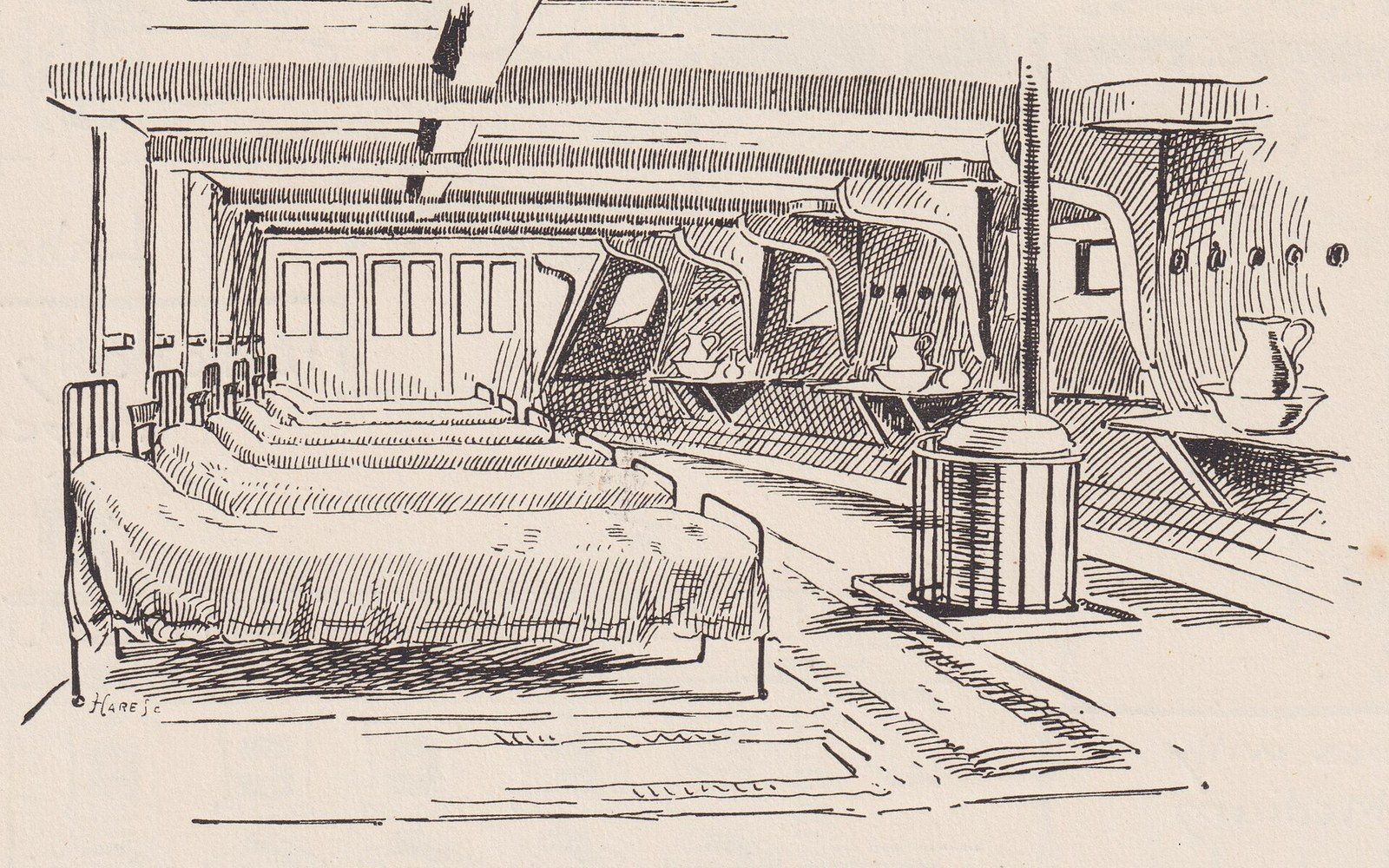
The reformers' argument was not primarily about the content of what the sisters knew. It was about the form in which they knew it. Apprenticeship knowledge — learned from a specific person in a specific place — could not be verified, compared, or regulated by an external body. A training course that ended in an examination could. The encounter between the two models in the latter half of the nineteenth century was, at its core, a dispute about who held the authority to certify competence, and what form that certification took.
Florence Nightingale's training school at St Thomas' Hospital, established in 1860, built its authority on exactly what the sisterhood model lacked: a documented programme with a defined syllabus, a fixed term, written assessments, and certificates whose legitimacy derived ↗ from the institution's secular standing rather than from a religious superior's judgment. The secular model was not necessarily better at producing competent nurses in the short term. What it produced more reliably was nurses whose competence was legible to hospital administrators, to government inspectors, and to the women themselves as a portable credential.
The Daughters of Charity were not untouched by this shift. By the latter decades of the nineteenth century, internal training within the congregation had become more structured — durations more defined, content more standardised — in part because the institutional environment in which their houses operated demanded it. Hospitals were increasingly subject to external oversight, and oversight required documentation of processes, including the process by which a sister became qualified to run a ward.
What changed between 1633 and 1900 was not the fundamental mechanism — learning from doing, under the supervision of someone who had done it longer — but the degree to which that mechanism was made visible, documented, and legible to audiences outside the house. Training before the course was instruction by proximity. Making it a course meant making it auditable. That shift, more than any change in the content of what nurses learned, is what the later reforms were actually named for.