The spread across Europe
The same rule, the same grey serge, the same ledger: how a Paris ↗ experiment became a continental institution
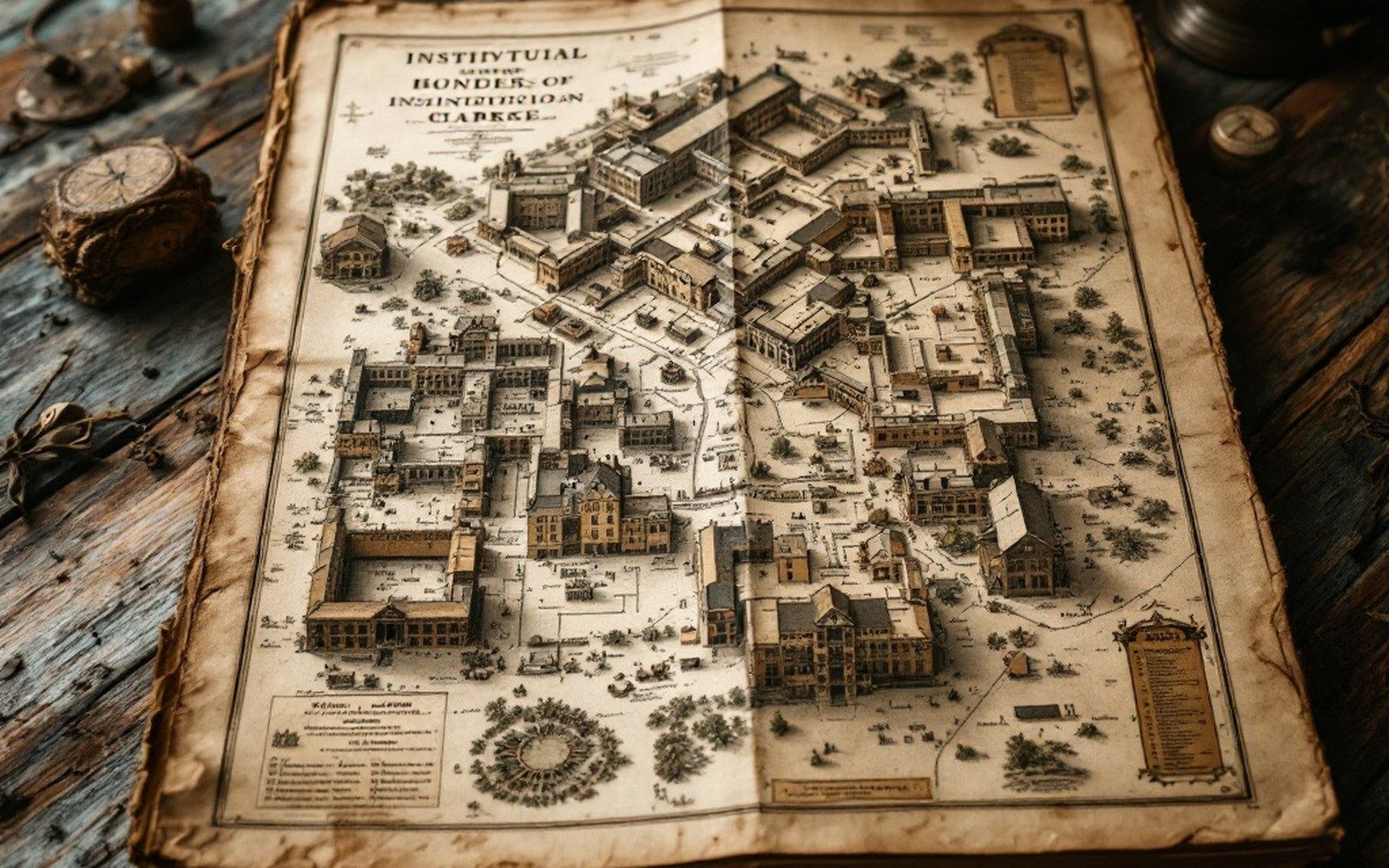
Houses were established across the continent on the same rule, which is what makes the model comparable between countries.
From the Rue du Bac outward
The first house was modest: a handful of women, a room in Paris, and a set of working arrangements that Vincent de Paul and Louise de Marillac had drawn up not as a grand design but as a practical response to immediate need. By the time Louise died in 1660, the Company of the Daughters of Charity had roughly forty houses, most of them in France. What followed over the next century and a half was methodical expansion across Catholic Europe — Poland, Spain, Portugal, the Italian states — and it was expansion on a single template, which is precisely what makes the institution historically legible across borders.
The mechanism of spread was not spontaneous. A bishop or a civic authority would approach the Company; the Company would negotiate the terms; a small group of sisters would be sent from an existing house, typically with an experienced sister designated as supérieure (superior) of the new foundation. That assignment structure, and the rule that each house remained under the authority of the Congregation of the Mission rather than local clergy, kept the organisation coherent. A house in Warsaw and a house in Madrid operated under recognisably the same framework as the original Paris establishments.
The rule as infrastructure
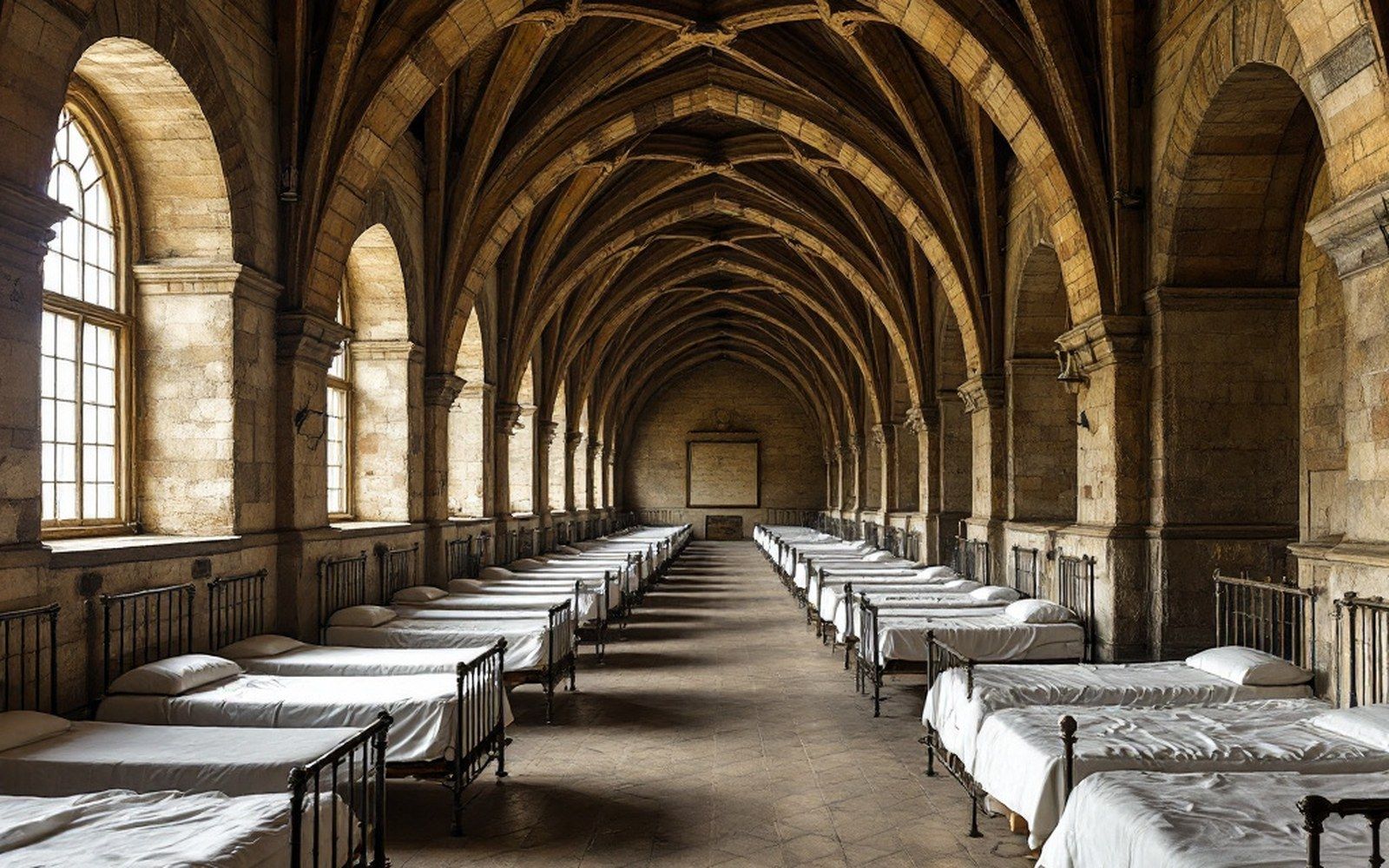
What made the model exportable was not sentiment but documentation. The Common Rules of the Daughters of Charity, revised and printed in editions through the seventeenth and eighteenth centuries, specified daily schedule, the conduct of sick-visits, the management of medicines, the keeping of records. When sisters arrived in a new city, the admissions ledger and the pharmacy inventory they set up looked like the ones they had left behind. This standardisation was not incidental — it was the entire point of the arrangement Louise de Marillac ↗ had insisted on from the beginning.
Poland received some of the earliest foundations outside France, with houses established in Warsaw in the 1650s at the invitation of Marie Louise de Gonzague, the French-born queen consort of Poland, who had known the Paris work directly. The Italian peninsula followed through the eighteenth century, with houses in Rome and a number of other cities operating under the same rule even as the political landscape around them shifted with Napoleonic reorganisation and, later, the upheavals of unification. Spain came later and in waves, shaped partly by the suppression of religious houses in the 1830s — a disruption that scattered sisters but did not dissolve the institution, which reconstituted itself once the political climate permitted.
The Napoleonic period was the sharpest interruption. In France itself, the Revolution had forced the Company to dissolve formally in 1792; sisters continued working in many hospitals and hospices in a technically lay capacity, which was the legal fiction available to them, and the Company was reconstituted under Napoleon in 1800. The episode confirmed something the founders had built in almost accidentally: because the Daughters had never been cloistered and held only annual rather than perpetual vows, they were harder to suppress than enclosed orders. The absence of a convent wall turned out to be institutional resilience.

What comparability means for the historian
By the middle of the nineteenth century, when secular nursing as an organised profession was beginning to take institutional form, the Daughters of Charity were present across the continent in numbers and with a record. Their houses could be compared. Admissions figures, staff-to-patient ratios, pharmacy practices, training arrangements — because the same rule governed all of them, these variables did not change from city to city in the way that practices in unreformed civic hospitals did. When reformers, medical administrators and eventually nursing theorists looked for evidence of what a functioning hospital system could look like, the Company's European network offered something rare: a large-scale, multi-site, documented precedent.
That comparability was not the founders' intention. They were solving local problems — a sick family in a Paris parish, a foundling in need of a wet-nurse, a fever ward without orderly management. But the insistence on a common rule, common dress, common record-keeping, and a deployment structure that could move a trained sister from one house to another across national borders produced, across two centuries, a deployable workforce that no contemporary secular institution could yet match in scale or consistency.