Beds shared, then separated
The single-occupancy hospital bed was a reform, not a starting point — and the Paris wards where the Daughters of Charity worked show exactly when and why the change was made.

Putting one patient in one bed was an institutional reform with a date, not an obvious arrangement.
From Common Practice to Contested Space
When the Daughters of Charity began working the wards of the Hôtel-Dieu ↗ in Paris during the seventeenth century, the arrangement of patients in beds was nothing like what a modern observer would expect. Large beds, capable of holding four, five or six adults, were standard. The sick lay head to foot alongside strangers whose diagnoses differed, whose wounds wept or whose fevers rose through the night. This was not negligence — it was the inherited logic of an institution built to shelter the destitute, where the primary obligation was to bring bodies in from the street and the secondary one was to tend them. Space was the constraint that governed everything else.
The Hôtel-Dieu, the largest hospital in Paris and one of the largest in Europe, had been operating on this logic for centuries before Louise de Marillac ↗ or Vincent de Paul entered the picture. By the mid-seventeenth century it held well over a thousand patients in a building that had not expanded proportionally to the city it served. The admissions ledger recorded names and dates of entry; it did not record bed assignments, because bed assignments in that sense did not exist. You were admitted; you were placed; the placement was wherever a body could fit.
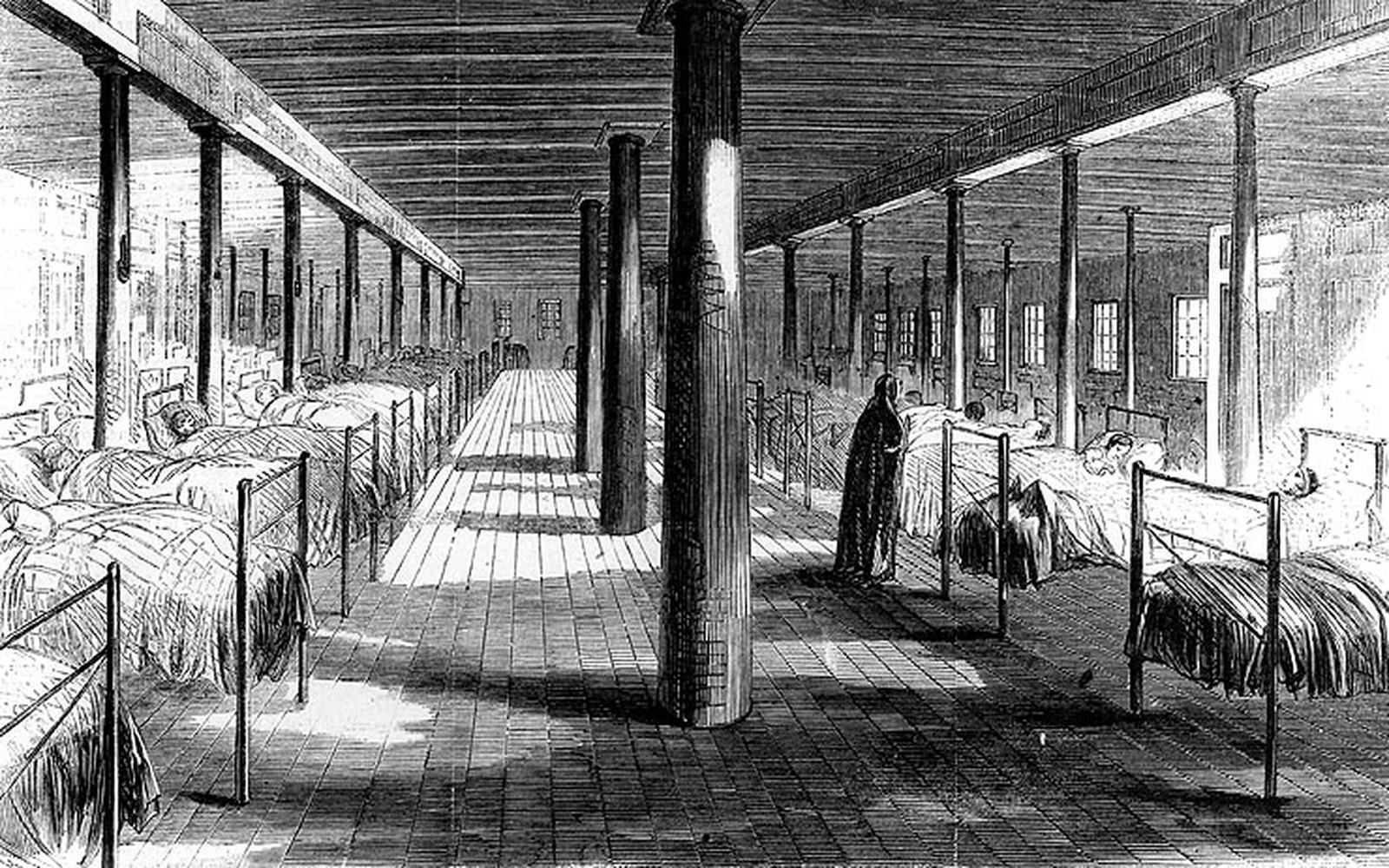
The sisters who worked those wards were, among other things, administrators of that system. The work of a workforce trained and transferred between houses meant that a sister arriving at the Hôtel-Dieu from a provincial house came with a shared vocabulary for managing patients, but the sheer scale of the Paris establishment was its own instruction. Rounds, distributions of food and medicine, the monitoring of those too weak to call out — all of this had to function inside a ward structure where individual patients were not individually housed.
The Reform and Its Reasoning
The argument for separating patients — one person, one bed — gathered force slowly and from more than one direction. Physicians who worked the wards in the eighteenth century began documenting what they observed: that febrile patients worsened the condition of those alongside them, that patients who entered with one complaint frequently left, if they left at all, with additional ones. The word "contagion" carried different theoretical freight in 1750 than it would after germ theory, but the practical observation was the same: proximity between the sick was dangerous.
At the Hôtel-Dieu specifically, the problem of its size and its ledger sharpened the case. A fire in 1772 destroyed portions of the building and forced a temporary dispersal of patients to smaller institutions across Paris. What observers recorded in the aftermath was striking: mortality rates at those smaller institutions, where patients were less densely housed, compared favourably with the Hôtel-Dieu's own figures. The Académie royale des sciences commissioned reports. Reformers, among them Jacques Tenon, produced detailed proposals arguing that hospital architecture itself was a medical variable, and that the shared bed was among the most lethal features of the existing system.
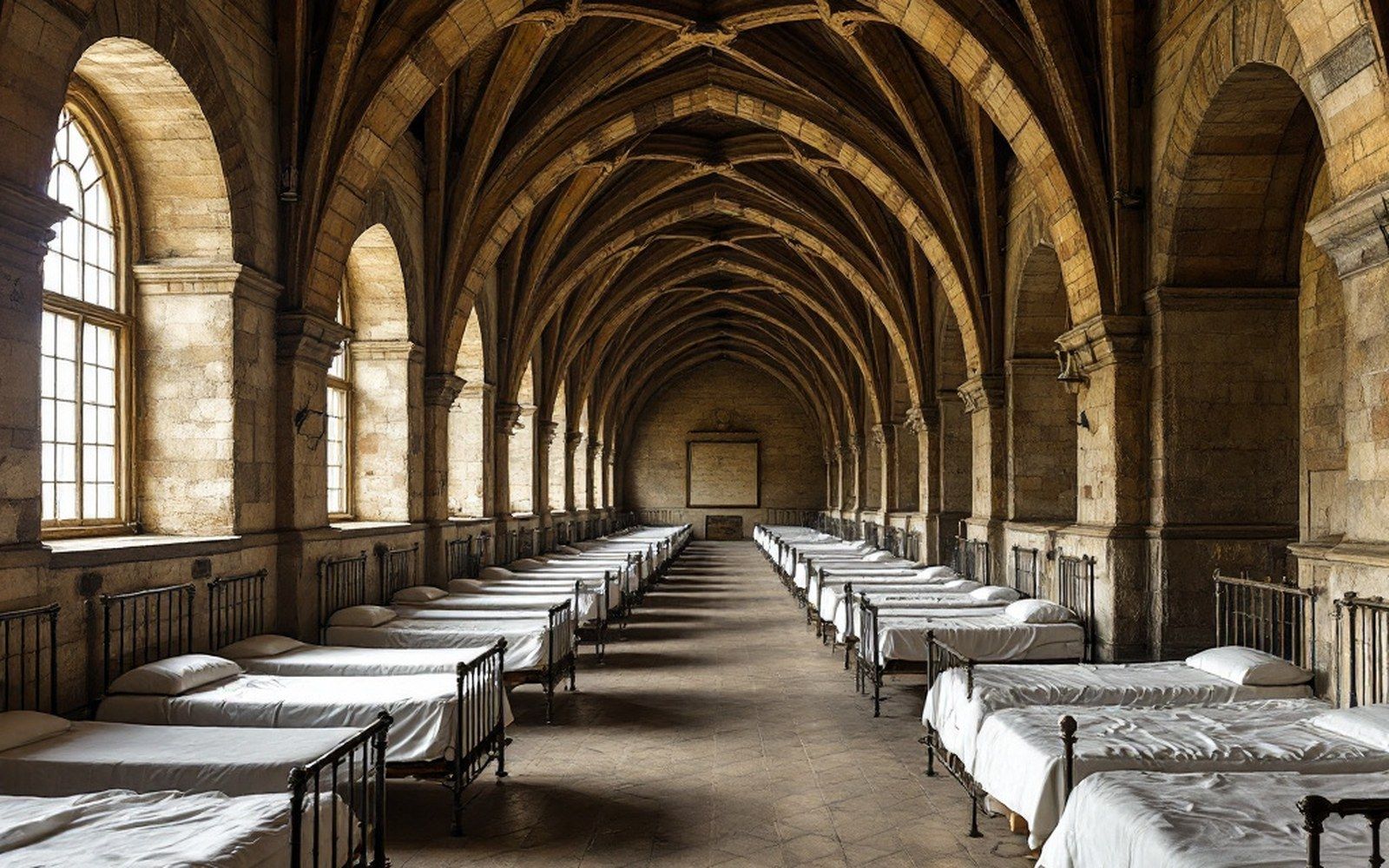
Tenon's 1788 Mémoires sur les hôpitaux de Paris surveyed the major Parisian hospitals with an engineer's eye for patient-per-bed ratios, ventilation, drainage and mortality. It became one of the foundational documents of hospital reform in Europe. The case it made against multi-occupancy beds was not primarily moral — it was numerical. The ledger, applied rigorously, made the argument that sentiment alone could not.
Change came unevenly. Reconstruction of the Hôtel-Dieu after the 1772 fire, completed in stages across the following decades, incorporated wider spacing and reduced bed-sharing. The revolutionary and Napoleonic periods brought further administrative reorganisation of Parisian hospitals. By the early nineteenth century, single-occupancy beds were increasingly the standard in the rebuilt wards, though provincial and smaller institutions lagged considerably.
The sisters who had worked the shared-bed wards and those who came after them worked within whatever arrangement the institution presented. What shifted across this period was not the nursing presence but the physical context around it — the ward as a space that had finally, slowly, been redesigned around the individual patient rather than the available floor.