The headdress, and why it went
A piece of starched linen that became a global emblem took three centuries to establish, and a single formal decision to remove
From grey serge to white wings
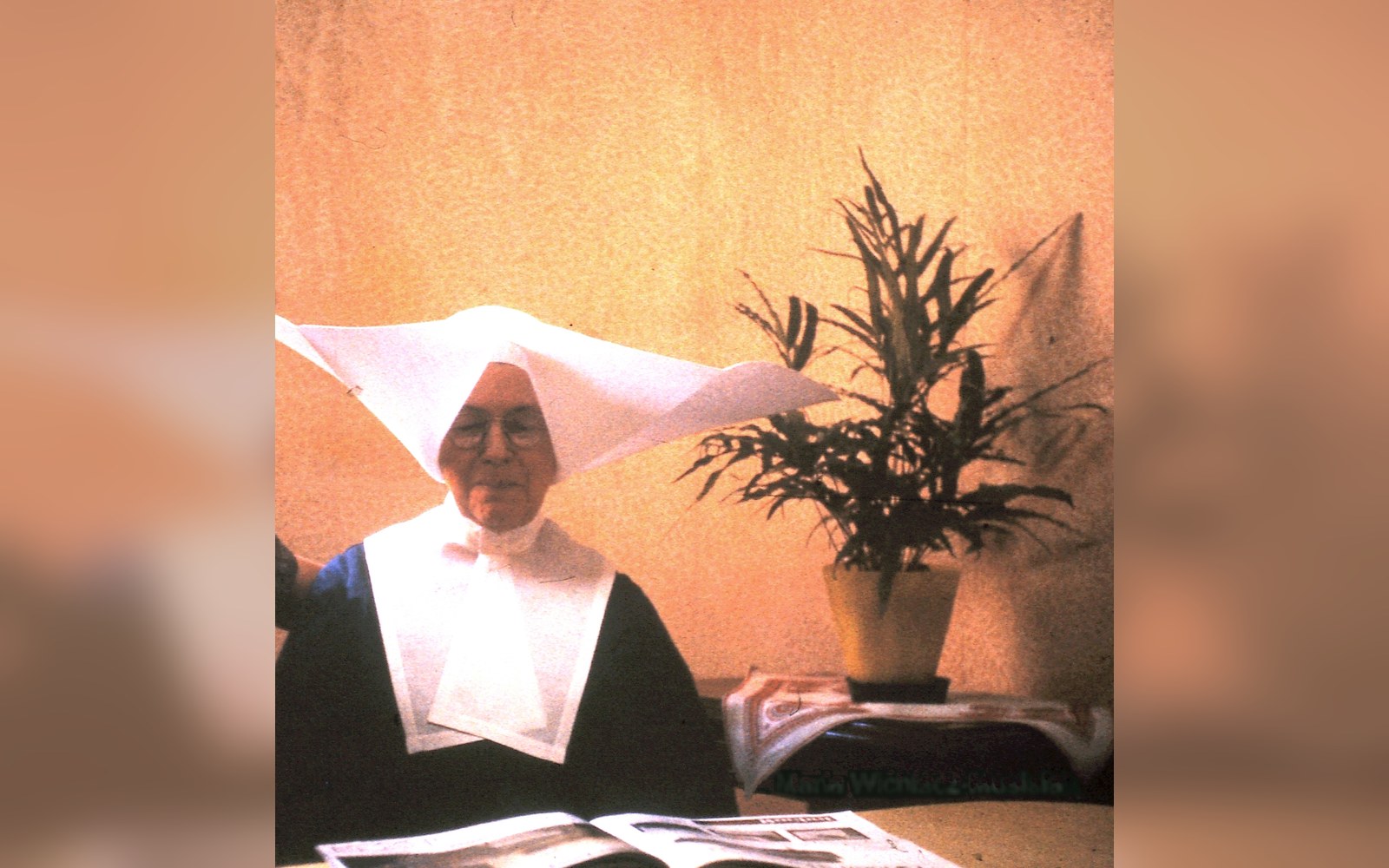
The Daughters of Charity were founded in 1633 without a habit in any traditional sense. That was deliberate. Vincent de Paul and Louise de Marillac ↗ had built their organisation around a simple principle: women who worked in public, in hospitals, in homes and on the street, could not do so from behind a cloister wall, and a conspicuous religious habit would attract the very restrictions they were trying to avoid. The early Sisters dressed as respectable peasant women of the Île-de-France dressed — grey serge skirts, a plain linen collar, a dark cape. The cornette, the wide-winged white headdress that would eventually make the Daughters one of the most recognisable institutions in the Western world, evolved from that ordinary beginning.
Its early form was modest: a simple white linen cap of the kind that rural women wore across northern France in the seventeenth century. It acquired its distinctive shape — the broad, stiffened lateral points that earned it its nickname of "the wings" — gradually, by institutional convention rather than by any single act of legislation. Seventeenth-century paintings and engravings show progressive widening of the brim, a shift from functional headwear to something that had become, by the eighteenth century, an unmistakable institutional mark. By the time the Daughters were working in military hospitals during the Napoleonic campaigns, the cornette was already more emblem than cap: identifiable at a distance, in circumstances where that identification carried practical meaning.
Administration, laundry and the question of fit
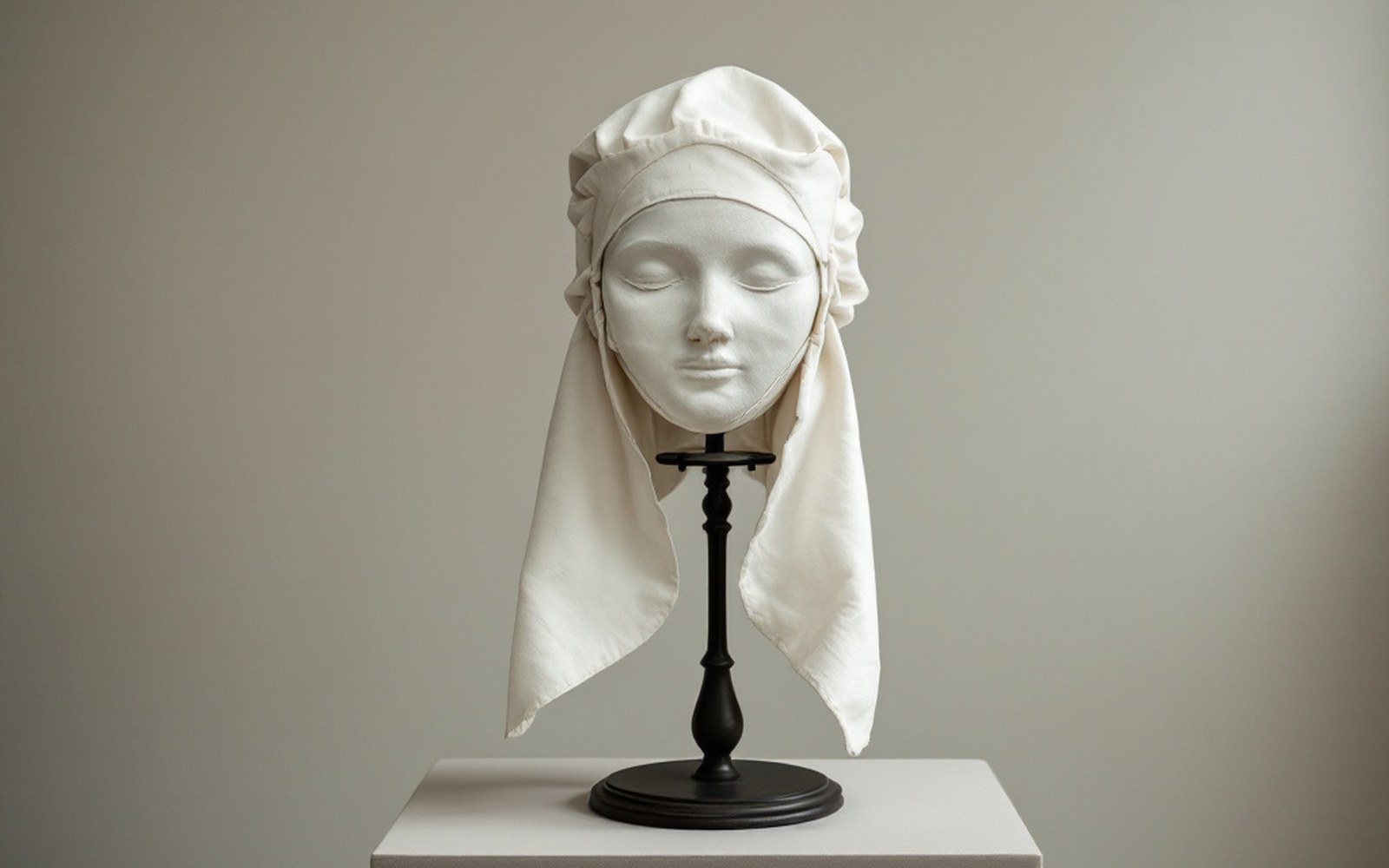
The clothing of the Daughters was never understood internally as mere costume. The grey serge habit and the white linen accessories — collar, apron, cornette — were working equipment, chosen and maintained on working principles. Linen was washable, which mattered in a ward. Serge was durable and inexpensive. The cornette was starched, which kept it rigid and upright, but starch required regular laundering, and laundering the cornette required skill: the points had to be pressed and shaped while damp, allowed to dry in position, then fitted without damage to the form. Every house with any significant number of Sisters maintained a laundry, and the cornette was a regular charge on its labour.
As the congregation expanded — into hospitals across Europe and beyond, into schools, orphanages, and military field stations — the logistics of the habit followed. Transfer between houses, which was central to how the organisation functioned, meant that a Sister arrived carrying her habit and expected to find the resources to maintain it. The cornette was not portable in the way that serge was: it required a specific set of tools, a specific skill, and enough time to complete the process properly before the next day's work. In large urban institutions this was manageable. In field conditions, or in newly established houses without trained laundry staff, it was not.
There was also a more immediate practical problem that accumulated clinical weight as the nineteenth century progressed. The wide lateral points — at their fullest extent projecting several inches to each side — were an obstacle in confined spaces. In hospital wards where beds were close, where equipment was handled quickly, where proximity to patients was constant and infection was beginning to be understood in terms that demanded physical discipline, a headdress that projected into the working radius was a liability. Nursing reformers of the second half of the nineteenth century, secular and religious alike, were increasingly concerned with the relationship between dress and clinical function. The cornette appeared in that context as a problem to be managed rather than a symbol to be celebrated.
1964: the formal record
The decision to replace the cornette was not informal, and it did not happen by drift. It was made through the ordinary channels of the congregation's governance, and it is on record. The Second Vatican Council, which opened in 1962, had initiated a broad review of religious life across the Roman Catholic Church, and the revision of habits was one of its explicit concerns. For a congregation whose clothing had been practical from the beginning — whose founders had explicitly avoided the traditional habit — the conciliar direction aligned with internal reasoning rather than cutting against it.

The 1964 decision ↗ to retire the cornette replaced it with a simplified veil and a modernised grey habit. The change was implemented congregation-wide, not left to individual houses or provinces. A garment that had taken three centuries to reach its definitive form was retired in a single institutional act — which is, in its own way, a demonstration of how seriously the organisation had always taken the relationship between clothing and function. The same governing logic that had produced the cornette in the first place produced its replacement.
What the cornette left behind
The visual history of the cornette is more thoroughly documented than its operational history, because images survive in abundance. The Daughters appear in nineteenth-century paintings, in illustrated newspapers, in early photographs, and — most persistently — in the pictorial imagination of those who encountered them during the wars of the nineteenth and early twentieth centuries. The Franco-Prussian War of 1870–71, the First World War, both produced photographs of Daughters working in field conditions with the cornette in full form, which gave it a particular association with crisis care that outlasted its actual use.
That visual record is not incidental to the history. The cornette became, before it was retired, something that the secular nursing profession measured itself against — or distinguished itself from. Where the two professions met in the nineteenth century, the habit marked a boundary: the Sister was identifiable in a way that the trained nurse, in her own developing uniform, was not yet. The nursing cap that became a standard element of secular nursing uniform in the late nineteenth century owed something, in its symbolic logic if not its precise form, to the tradition that the cornette represented: the idea that a woman doing clinical work should be visibly marked as belonging to an institution with defined standards and accountability.

By 1964, secular nursing had its own uniform traditions, its own insignia, its own registers. The cornette had done the work of institutional identification for three hundred years. The congregation retired it on practical grounds, as it had adopted it on practical grounds, and the reasoning in both cases was the same: the work came first.