Twelve hundred beds and a ledger that had to balance
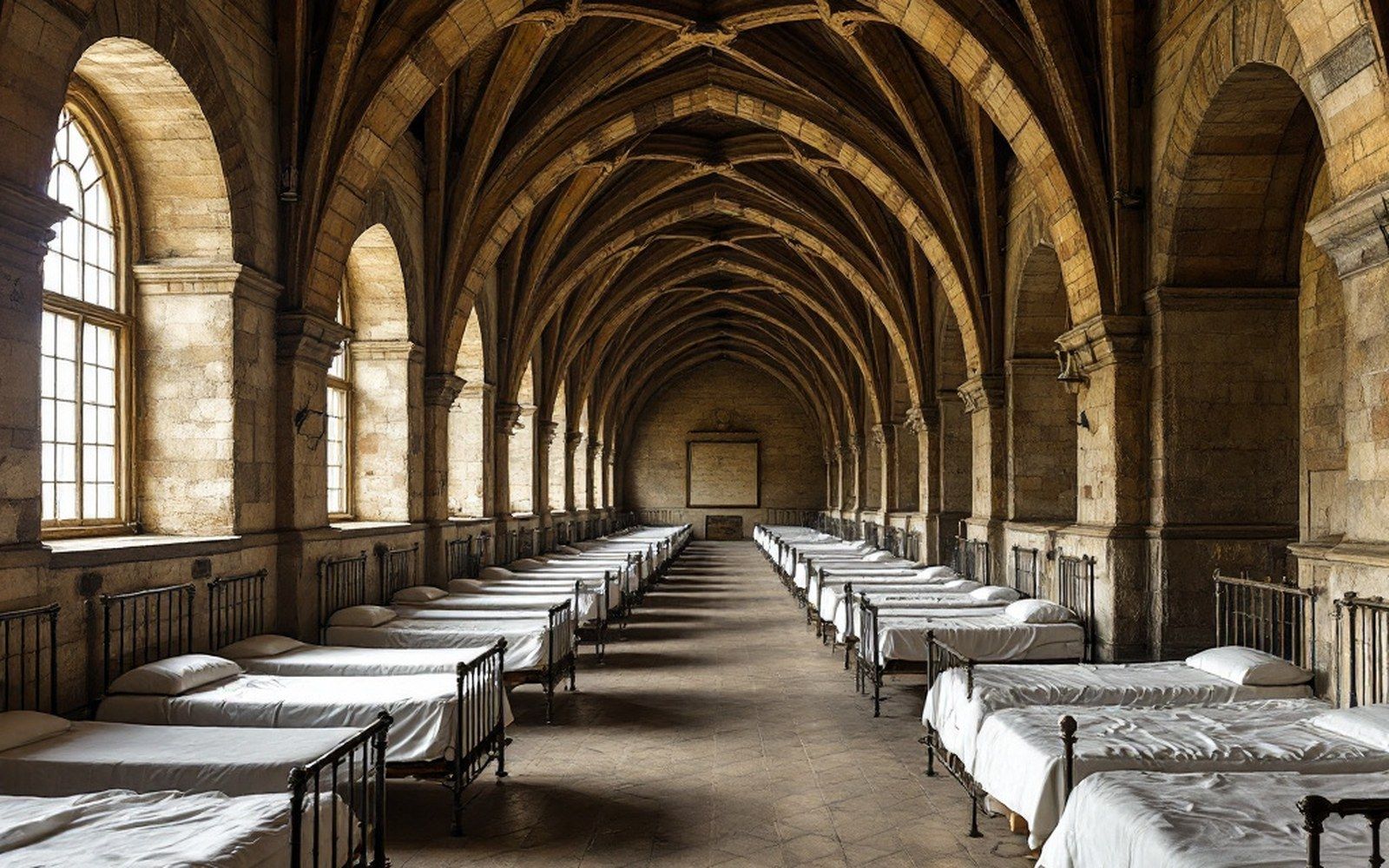
The Paris hospital was enormous, and running it was an administrative problem before it was a medical one.
The scale of the problem
Paris's Hôtel-Dieu was not a hospital in any modern sense of the word. By the seventeenth century it was a city within the city: a dense, sprawling institution on the Île de la Cité, hard against the south wall of Notre-Dame, receiving every category of sick, injured and dying person the capital could produce. Estimates of its bed capacity vary by decade and by how one counts the great shared beds that lined its wards, but the institution regularly held well over a thousand patients at a time — twelve hundred beds is a figure that appears in period accounts, and on bad winters, when epidemic disease drove up admissions, the actual count of bodies in those beds ran higher still. It was the largest hospital in France and, by most measures, the largest in Europe.
Running it was an administrative problem before it was a medical one. Food had to be sourced, stored and distributed. Linen had to be counted out and washed. Drugs had to be compounded in the apothecary and dispensed against individual orders. The dead had to be recorded and removed. Admissions had to be logged, because a body that entered the building had to be accounted for whether it left by the door or by the mortuary. Someone had to know, on any given morning, how many patients were in each ward, how many had died overnight, how many new arrivals were waiting in the courtyard, and whether the bread delivery matched the census. At an institution of this scale, the administrative structure was what separated organised care from chaos.
What the ledger actually recorded
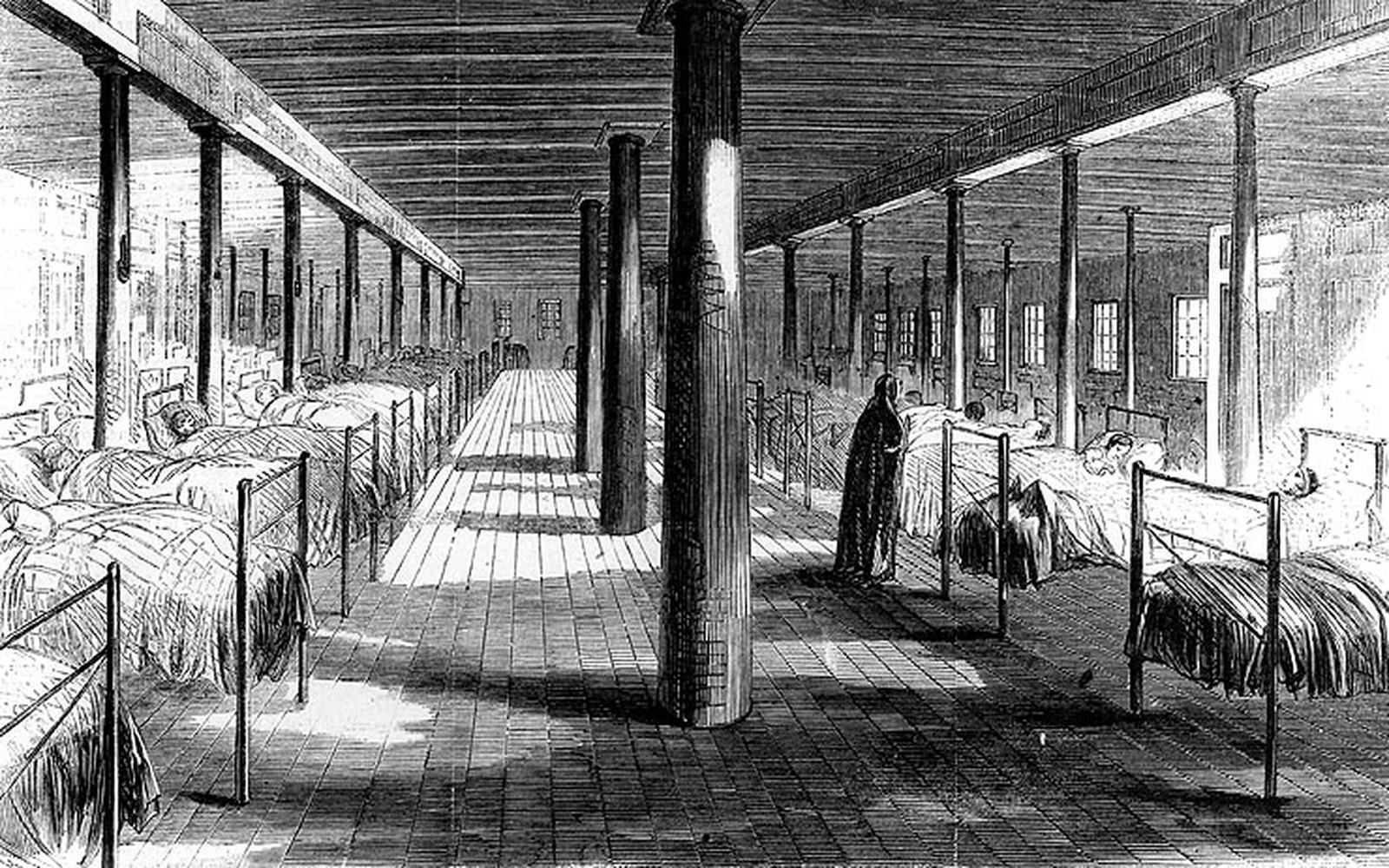
The admission ledger was not a medical record in any clinical sense. It was a management instrument. A patient's name, the date of arrival, the ward assigned, and — eventually — the outcome: discharged, dead, or occasionally transferred. The column for outcome was the one that mattered most to the institution's governors, because the Hôtel-Dieu existed under royal and ecclesiastical authority and was subject to periodic inspection. Inspectors wanted to know not what treatments had been administered but what had happened to the people who had come in. A ledger that could not balance — that showed more admissions than the sum of discharges and deaths — was evidence of a ward out of control.
This is why the ledger was kept by the sisters who ran the wards, under the authority of their superiors, rather than by clerks detached from the bedside. The Daughters of Charity, who served in hospitals across France from the mid-seventeenth century onward, were responsible for ward management in the houses where they worked, but the Hôtel-Dieu itself was a far older and more complex institution with its own administrative hierarchy. What the Daughters brought to smaller hospital foundations was precisely the discipline that a ledger-based system required: a defined chain of accountability, a daily count, and a superior who could answer for the numbers. Vincent de Paul and Louise de Marillac had designed their company as a deployable workforce rather than a contemplative community, and deployment into large institutions only worked if the women arriving could slot into an existing administrative structure without friction.
The arithmetic of twelve hundred beds
The sheer arithmetic imposed a logic. If a ward held sixty beds and each bed held two patients — and shared beds were standard well into the eighteenth century — then a single sister managing that ward was responsible for tracking a hundred and twenty bodies, not sixty. Linen allocation, food portions, drug orders from the apothecary: all of these were calculated per patient, which meant the ward count had to be accurate before anything else happened. An error at the count propagated through every subsequent transaction. Too few portions ordered meant patients went unfed; too many meant waste that the institution's ledger-keepers would notice and query.

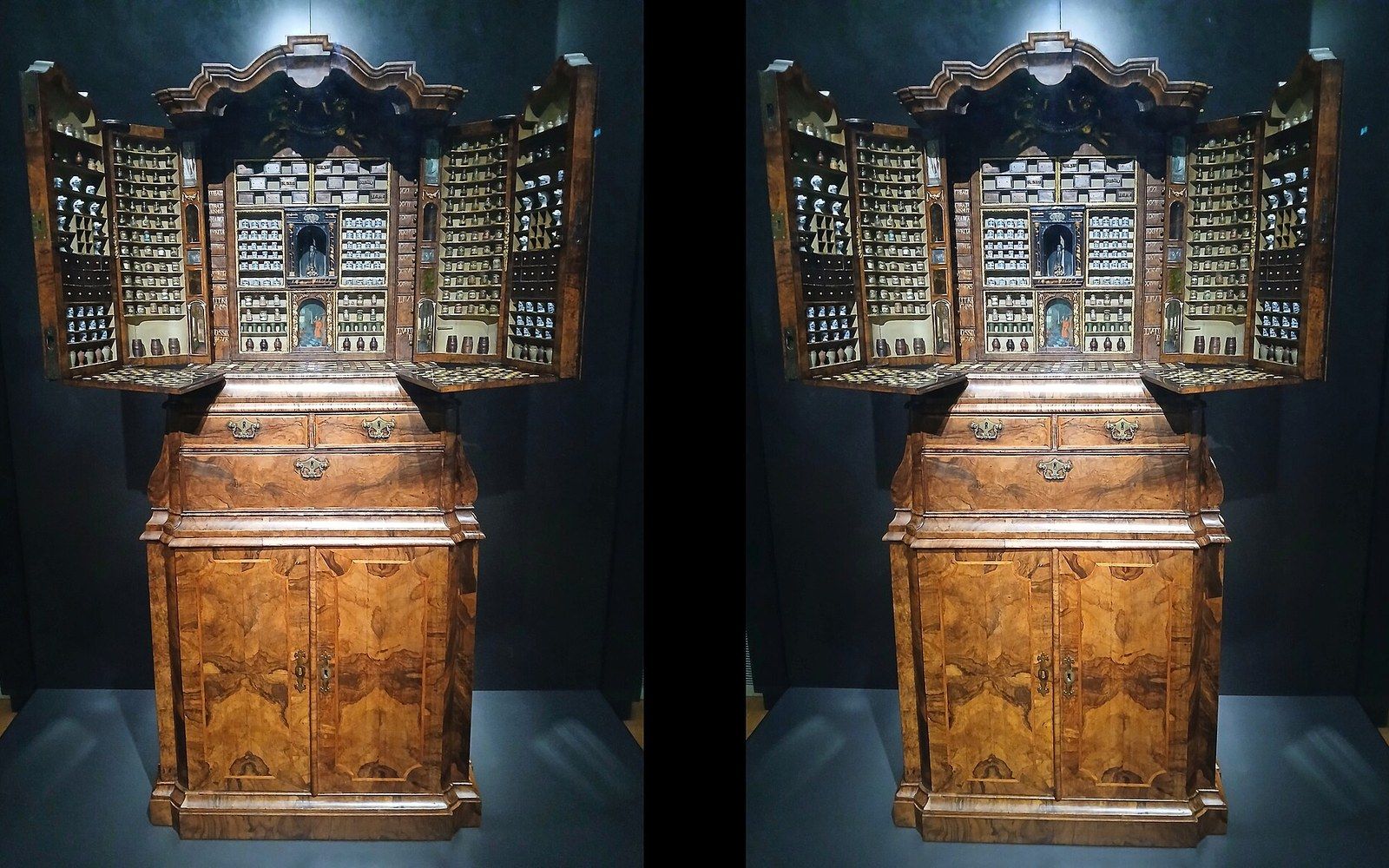
The Hôtel-Dieu's pharmacy ↗ was one of the largest in France, compounding preparations for a patient population that dwarfed any private household or monastery. Drug orders were written by the physicians and surgeons but fulfilled by apothecary staff, and the quantities involved required that someone on the ward side could verify receipt and distribution. Waste, pilferage and simple error were endemic in institutions of this scale, and the ledger — cross-referenced against the pharmacy's own stock records — was the primary check on all three. A sister who could not keep her ward count straight was not merely inefficient; she was a gap in a financial control system that the institution's governors took seriously.
Administration as care
There is a temptation to separate the administrative function from the caring one, as though the ledger and the bedside were in different categories of activity. The record of seventeenth- and eighteenth-century hospital work does not support that separation. The woman who counted linen was the same woman who changed it. The one who verified the food portions was the one who carried them to bedridden patients and noted which of them could not eat. The ledger entry recording a death was written by someone who had been in the ward when it happened.
This integration of record-keeping and direct care was not incidental — it was structural. Louise de Marillac's insistence on practical training, documented in the Daughters of Charity's early rules ↗, reflected a conviction that the woman in charge of a ward had to understand every operation in it, including its paperwork. An institution that separated these functions created a class of administrators who had never made a bed and a class of carers who had no authority over resources. The Hôtel-Dieu's chronic difficulties — recurring scandals over conditions, repeated royal commissions of inquiry across the seventeenth and eighteenth centuries — were partly the product of exactly this separation at the upper levels of its governance.
When nineteenth-century reformers began to argue for a trained secular nursing profession, the administrative competence of the religious sisterhoods was one of the things they studied most carefully. Florence Nightingale visited Paris ↗ and observed institutional religious care in person; her subsequent thinking about ward management — the unified authority of the matron, the daily census, the supply ledger — drew on a model that the Daughters of Charity and similar congregations had been operating for two centuries. The argument between the two professions about authority, training and status, which intensified through the second half of the nineteenth century, was in part an argument about who would inherit the administrative architecture that the sisterhoods had built. The ledger that had to balance was always also a claim to control the ward.