A deployable workforce
Structured assignment and managed transfer turned the Daughters of Charity into something unprecedented: a mobile, trainable, institutional workforce answerable to a central administration.

Training, assignment and transfer between houses made it an organisation rather than a set of individuals.
The mechanism of mobility
Women's religious communities in seventeenth-century France were, almost without exception, fixed to a place. Enclosure was not merely a spiritual discipline; it was a canonical fence. Once professed, a cloistered nun stayed within her convent's walls, which meant any given house was effectively self-contained. Skills, knowledge and personnel could not be moved.
The arrangement that Vincent de Paul and Louise de Marillac constructed between 1633 and the formal approval of the Daughters of Charity's Rules in 1658 broke that logic deliberately. By declining cloister and replacing perpetual solemn vows with annual vows — renewed each year on the Feast of the Annunciation — the community produced something a cloistered order structurally could not: a sister who could, when the superior decided it, be redeployed.
The annual vow was not a weakening of commitment. It was a mechanism. A sister who renewed each year remained in good standing; the same renewal cycle meant the superiors could, in principle, assign her elsewhere without the canonical complications that attended permanent profession. The practical result was a workforce that could be directed — to a new city, a military camp, a hospital ward, a rural parish — wherever the organisation's leadership judged the need greatest.
Training as a transferable standard
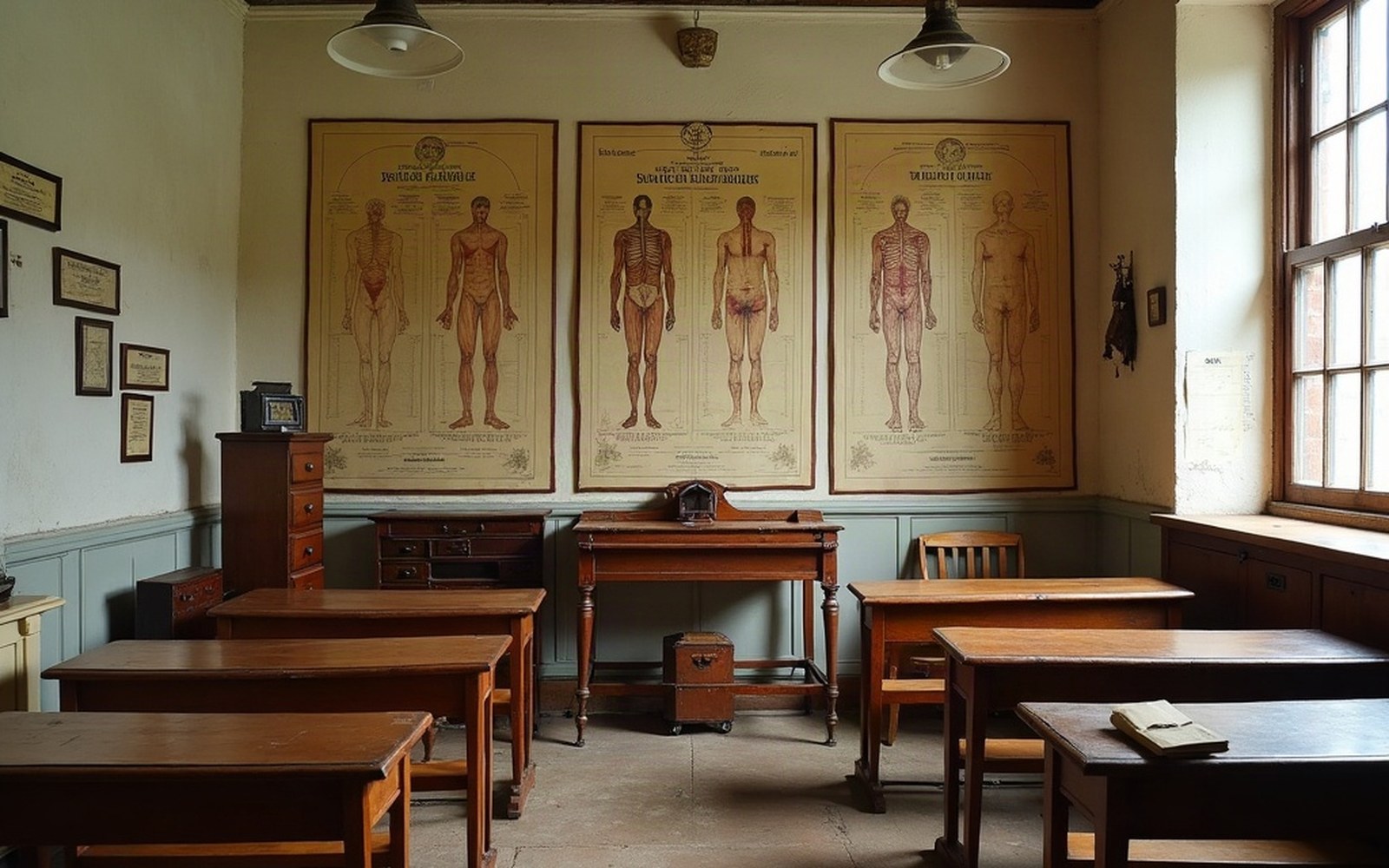
Mobility only works if the person moved arrives knowing what to do. The Daughters of Charity solved this through the séminaire — an initial period of instruction at the Paris motherhouse — before a sister was assigned to a house. The content was practical: care of the sick, management of a ward, preparation of medicines under the supervision of the house apothecary, basic record-keeping. The ambition was that a sister trained in Paris could walk into a hospital in Lyon or Warsaw and perform recognisably the same tasks to the same standard.
This was not unique to nursing in any modern sense; it was institutional apprenticeship, and it predates any formal secular model of nurse training by roughly two centuries. What made it remarkable was not its sophistication but its systematic intent. The mother superior in Paris did not train women for a single house. She trained them for the network.
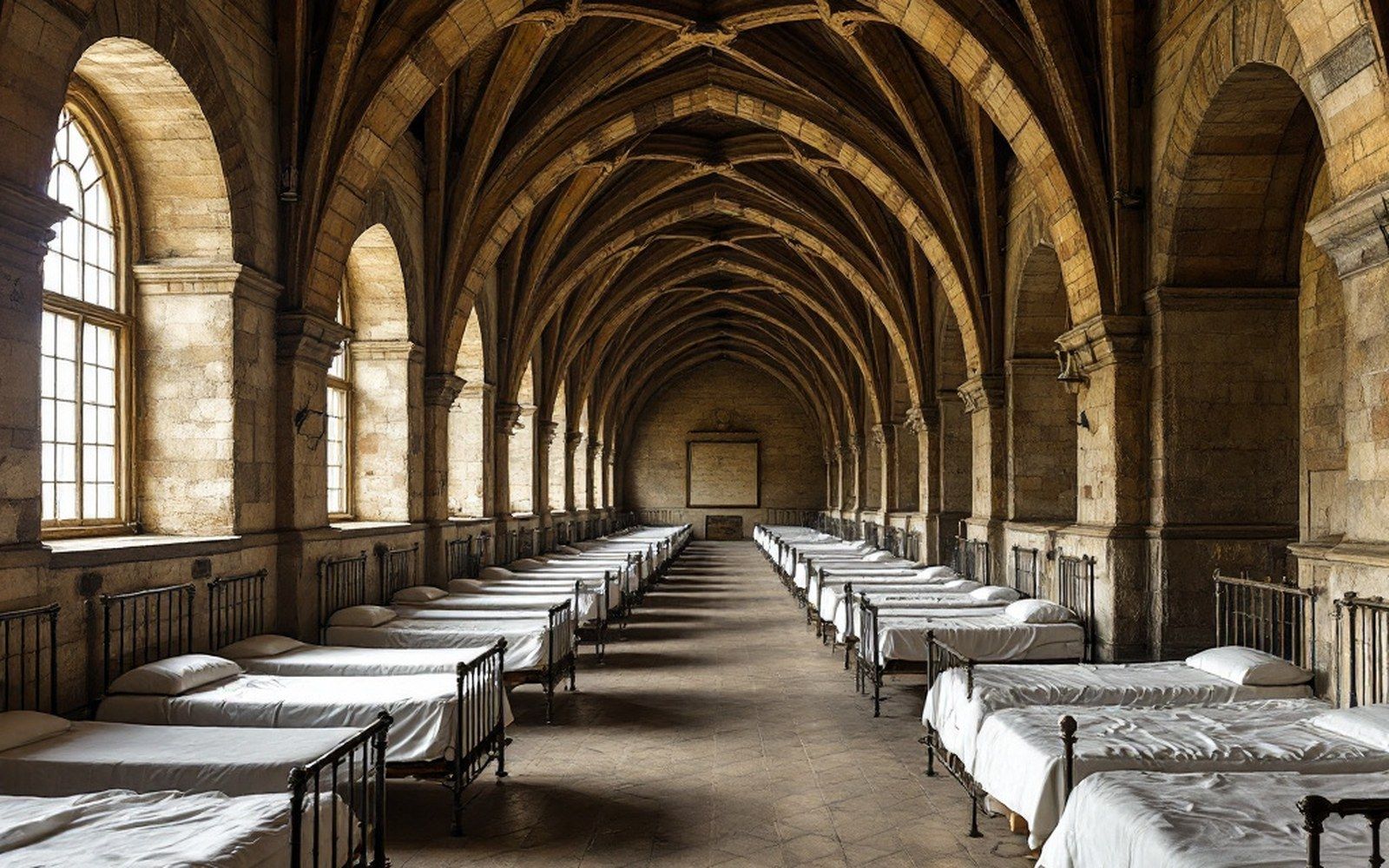
The Hôtel-Dieu in Paris represented the extreme case — a hospital of enormous scale whose administrative complexity required not just capable individuals but interchangeable ones. When a sister died, fell ill or was transferred, the ward could not simply stop functioning. The admissions ledger kept running; the pharmacy kept dispensing; the beds kept filling. That continuity depended on replaceable, trained personnel, which is precisely what the organisation's structure was designed to supply.
The organisation above the individual
Central assignment meant that a Daughter of Charity did not choose her posting. She was sent. The correspondence between Vincent de Paul ↗ and Louise de Marillac ↗ — several hundred letters survive — shows the two founders negotiating assignments, weighing the needs of particular houses against the capacities of individual sisters, and occasionally overriding local preferences when the organisation's interests required it. This was management in the modern functional sense: matching labour to institutional need across a distributed operation.
By the mid-eighteenth century the Daughters of Charity operated houses across France and into Poland, Italy and beyond. The same Rule governed each one, the same training had prepared the sisters working in them, and the same Paris administration held the authority to move personnel between them. That coherence — identical formation, central authority, annual rather than perpetual vows — was what made expansion possible without fragmentation. A house in Kraków answered to the same structure as a house in Angers.
When the secular nursing profession began to organise itself in the nineteenth century, it did so in the presence of this already-existing model: an institution with a trained, mobile, hierarchically managed workforce, a standard of formation and a record-keeping culture. The debt was not always acknowledged, but the template was visible to anyone who looked at a Daughters of Charity ward and asked how it actually ran.