Vincent de Paul and Louise de Marillac
The partnership that built a deployable institution from a charitable experiment — and left enough correspondence to prove it.

One supplied the structure and the other ran it, and the correspondence between them is the primary source for how it worked.
The Arrangement
In 1633, two people in Paris made a decision that had no precedent in the Catholic world: they established a community of women who would work in public, tend the sick in their homes and in hospitals, and remain deliberately uncloistered. One of them, Vincent de Paul, was a priest with access to ecclesiastical networks, royal patronage, and a gift for institutional architecture. The other, Louise de Marillac, was a widow with administrative intelligence, a capacity for sustained physical work, and the willingness to live inside the organisation she was building rather than merely directing it from a distance. The division was not between vision and execution. Both contributed to both. But the forms their contributions took were different, and the correspondence they kept across three decades makes it possible to say with some precision what each one actually did.

Vincent had already been working with networks of wealthy Parisian women — the Confraternities of Charity, founded from 1617 onward — who organised relief for the poor in parishes across France. The problem he kept encountering was structural: aristocratic and bourgeois women could donate, supervise and direct, but the physical labour of nursing — lifting, washing, carrying — was not something the social expectations of their class allowed them to perform for long. Louise de Marillac ↗ had a different position. She came from the minor nobility, was educated and literate, but had spent years in conditions that gave her both humility and organisational authority. When Vincent sent her to inspect the provincial confraternities in the early 1630s, she travelled alone, assessed what she found, and wrote back detailed reports. The inspection letters are still the clearest evidence that the Daughters of Charity was, from the beginning, a managed enterprise rather than a pious impulse.
The Letters as a Working Record
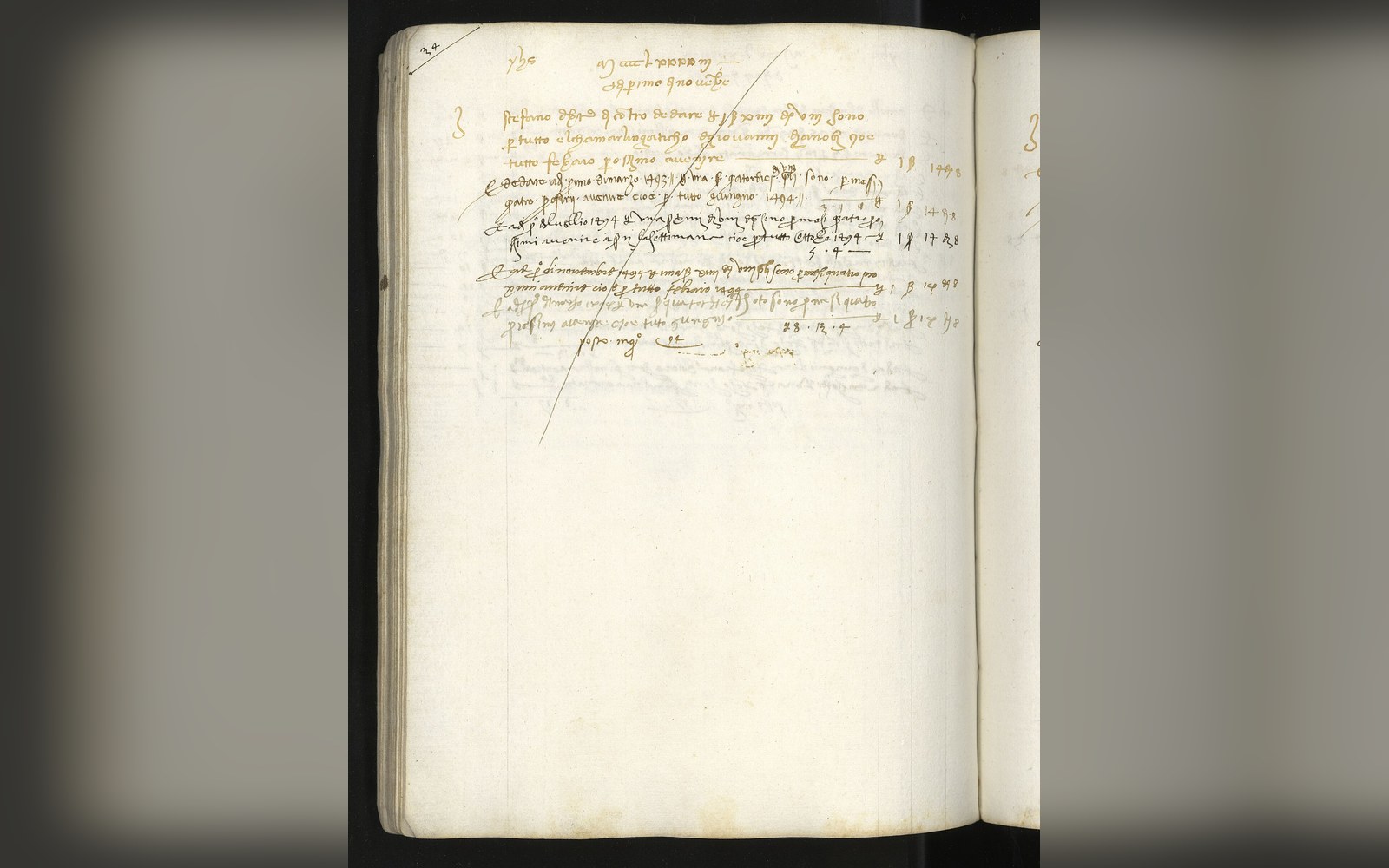
The correspondence between Vincent and Louise — hundreds of letters surviving — is not devotional in character. It is operational. Louise writes about recruitment: which young women from which villages, what qualities she was looking for, why a particular candidate would not last. She writes about training, about the problem of maintaining standards when a house was understaffed, about the behaviour of the women placed in hospitals who were working alongside male attendants without the protection of enclosure. Vincent replies with instructions, with decisions about placement and transfer, with advice that is sometimes pastoral and sometimes purely managerial. The letters are held across several archives, with critical editions prepared by scholars of the Vincentian tradition, and they remain a primary source of the first order for the institutional history of early modern Catholic social organisation.
What the letters reveal, above all, is that Louise held the internal authority. Vincent set the broad parameters — the relationship to the Church, the arrangement with Rome that kept the community outside the canonical structure of religious orders, the agreement with the Archbishop of Paris — but the day-to-day decisions about who went where, who was dismissed, how training was conducted, and what the working conditions in a given hospital actually were: those were Louise's domain. She wrote the rules for the community. She trained the women who became the first superiors of provincial houses. She negotiated directly with hospital administrators, including the board of the Hôtel-Dieu ↗, the vast Paris hospital where the sisters worked from the 1630s onward.
What Each One Actually Built
Vincent's contribution was, in the most literal sense, canonical. The community that became the Daughters of Charity was not, legally, a religious order. Its members took annual vows rather than perpetual ones — a distinction that was not a compromise but a deliberate structural choice, because perpetual vows would have required enclosure under the 1563 decrees of the Council of Trent. Annual vows meant the women remained, in ecclesiastical terms, secular. That status is what allowed them to walk into a hospital ward, cross a city on an errand, or transfer between houses at a superior's direction. Vincent understood the canonical landscape well enough to navigate it, and the arrangement he secured held for more than three centuries. Without that legal architecture, the work Louise was doing inside wards and village homes would have been impossible to sustain institutionally.
Louise's contribution was the living organisation. She is the author of the community's early rules, its training practices, and the culture of record-keeping — the admissions ledger, the pharmacy stock list, the assignment register — that made it legible and governable as it expanded. The grey serge habit, the linen collar, the practical working dress she specified were chosen for washability and movement, not as symbols. When the famous white cornette — the broad-winged headdress that became the community's most visible feature — became standardised, it was a working item for outdoor movement and ward identification, not a liturgical object. Louise treated the clothing question the way she treated everything: as a logistical problem with a practical answer.
She died in March 1660, six months before Vincent, and what she left behind was a functioning institution with established houses across France, a trained internal leadership cadre, and enough documented procedure that the community could continue without either founder. That continuity was the point. Vincent had told the women from early on that if the community ceased to be useful, it should be dissolved — a statement remarkable for its period, and one that frames the whole enterprise in functional rather than devotional terms. The community did not cease to be useful. It expanded steadily through the seventeenth and eighteenth centuries and then, after surviving the suppression of religious orders during the French Revolution, re-established itself in Paris on the Rue du Bac, the address that became its permanent headquarters.
Why the Partnership Was the Institution
The tendency in later commemorative writing has been to assign Vincent the vision and Louise the implementation — a distribution that flatters neither of them accurately and obscures the actual dynamic. Vincent was an organiser himself, the founder of the Congregation of the Mission and the architect of multiple charitable enterprises; he was not simply a distant patron who had an idea and handed it to a woman to execute. And Louise was not simply an executor; she made founding decisions about structure, personnel and practice that Vincent accepted and endorsed. The relationship worked because neither founder was trying to build something for their own continuation. What they built instead was a workforce with a governance structure, a training system, and a written record — which is why historians can still reconstruct how it functioned, ward by ward and letter by letter.