The apothecary
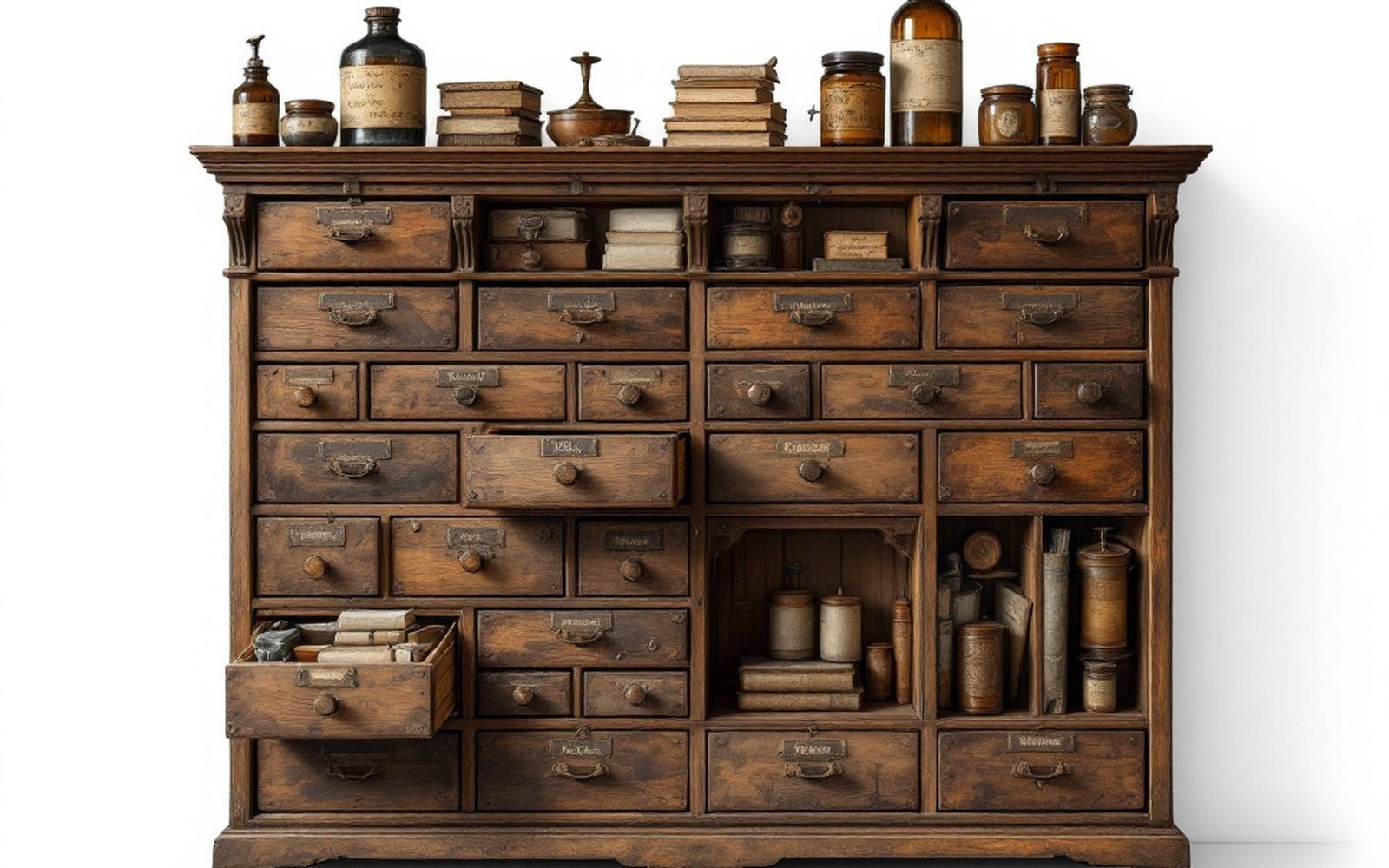
A hospital pharmacy was a workshop with a stock list, and the cabinets survive better than the practice.
A workshop before it was a department
When a Daughter of Charity took charge of a hospital pharmacy in the seventeenth or eighteenth century, she inherited a room closer in character to a craftsman's workshop than to anything a later century would recognise as clinical. The apothecary's space — pharmacie in the French institutional record — held mortars, stills, drying racks, and ranked cabinets of herbs, resins, and mineral preparations. It was part storehouse, part laboratory, and entirely accountable: every substance that entered and left appeared, in principle, on a stock list.
That accountability was not incidental. The Daughters worked inside large establishments — the Hôtel-Dieu in Paris ↗, with its hundreds of beds, was the extreme case but not the only one — where waste and pilfering were standing problems. The pharmacy's ledger, recording receipts and dispensings, was an administrative instrument as much as a clinical one. Louise de Marillac ↗'s correspondence with Vincent de Paul returns repeatedly to the material management of the houses they were building together, and pharmacy supplies fell squarely inside that domain: quantities had to be ordered, paid for, stored correctly, and matched to patient need without surplus rotting on the shelf.
What the practice actually involved
An apothecary in early modern France was a trained craftsman, licensed and guild-regulated, responsible for compounding remedies from raw ingredients. The physician diagnosed; the apothecary prepared. In hospitals run or staffed by the Daughters, the relationship was necessarily close: a sister managing the pharmacy worked to prescriptions she did not write, which required enough practical knowledge to compound accurately, identify substitutions when an ingredient ran short, and recognise when a preparation had spoiled.
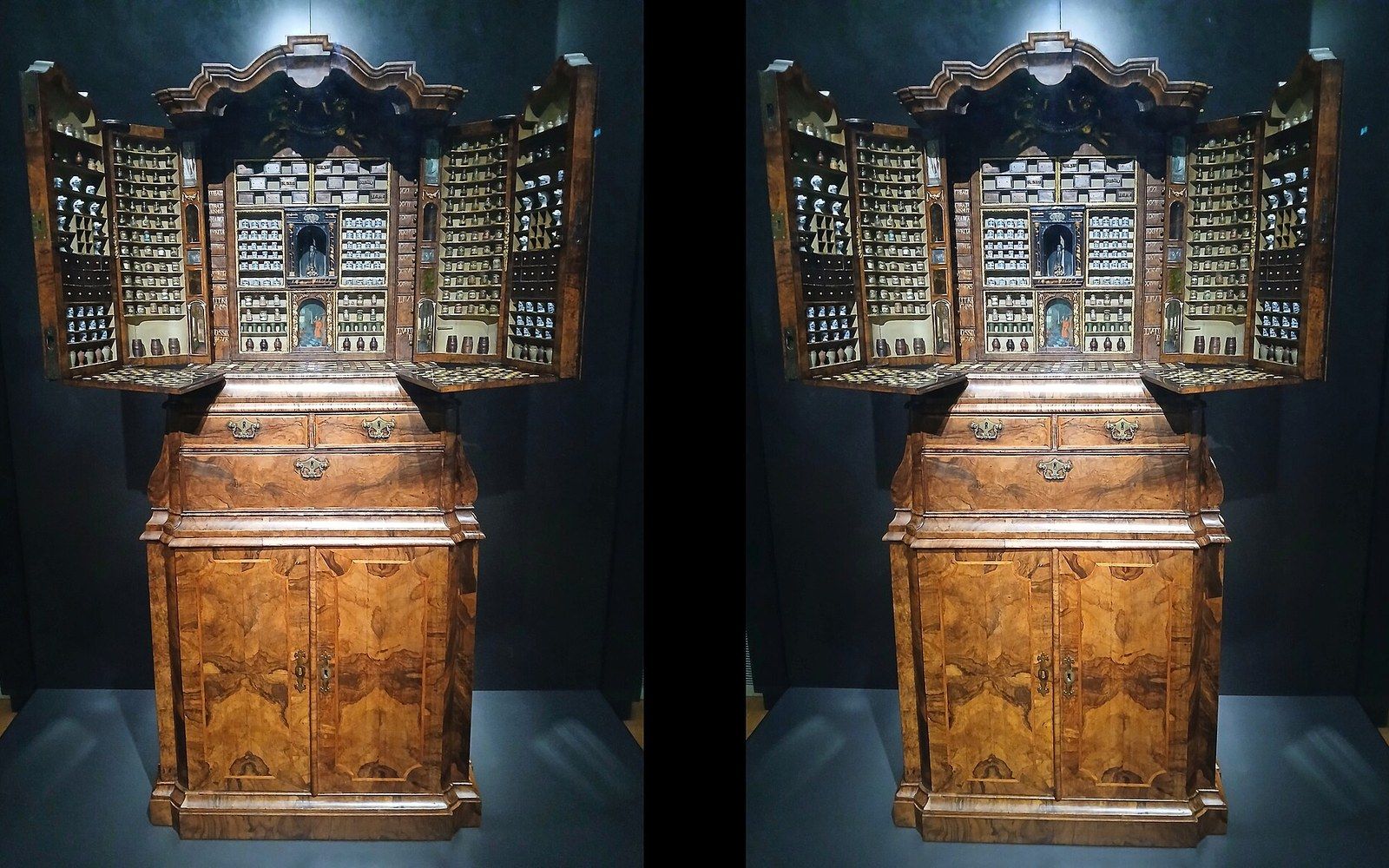
The compounds themselves ranged from herbal decoctions and syrups through to preparations involving mercury, antimony, and other mineral substances then considered therapeutic. Storage demanded attention to temperature and light; some materials were dangerous in excess and required separate, locked cabinetry. The physical organisation of a well-run hospital pharmacy was thus a small feat of classification — ingredients grouped by provenance or action, quantities rotated to keep stock fresh, the locked cabinet distinguished from the open shelf.
What survives of this practice is, characteristically, more cabinet than recipe. Surviving French hospital pharmacy furniture — ranks of labelled drawers, large faience jars painted with drug names, wooden apothecary chests — gives the organisational logic in three dimensions. The formularies and dispensing records are rarer, and where they exist they tend to be institutional archives rather than published documents.
The pharmacy and the wider ward
The pharmacy's position in a hospital run by the Daughters was not peripheral. Because the sisters staffed multiple functions — ward care, kitchen, linen, admissions — the pharmacy sat inside an integrated domestic and clinical economy rather than apart from it. A sister assigned to the pharmacy held a specialist role within a workforce that was, by design, deployable and interchangeable across houses and functions. The training that prepared her was apprenticeship inside an institution, passed from an experienced sister to a newer one, with no formal qualification attached to the knowledge.
That informality had consequences when, in the nineteenth century, secular nursing began to organise itself around credentials and to argue that hospital sisterhoods occupied clinical positions they were not formally trained to hold. The pharmacy was one of the spaces where the question of competence and certification became pointed: who had the right to compound and dispense, and on what authority? The emergence of pharmacy as a regulated profession in France across the nineteenth century progressively formalised boundaries that had previously been managed by institutional custom, not statute.
The cabinets, meanwhile, survive rather better than the arguments — solid wood and painted faience outlasting the paper record of the women who worked beside them.